12 Best Enrichment Software Platforms for GTM Teams in 2026
Table of Contents
Explore Bitscale
Find decision makers, more insights and contact information about this company on Bitscale
Enrichment software is now table stakes for any go-to-market team that expects its pipeline math to hold up. B2B data decays at roughly 2.1% per month (about 22.5% per year, according to HubSpot), so the list you cleaned up last quarter is already drifting out of date. When you try to scale outbound, ABM, and product-led motions at the same time, incomplete and outdated records quietly erode conversion rates, waste rep time, and throw off routing and scoring logic.
The global data enrichment solutions market reached $2.37 billion in 2023 and is projected to grow at a 10.1% CAGR through 2030 (Landbase, 2026). The spending tracks a bigger change in how teams use enrichment: it is no longer a one-time append you run before a campaign. The expectation is continuous b2b data enrichment that lives inside prospecting, CRM data enrichment workflows, buying-signal detection, and AI-assisted outreach. This piece sizes up 12 platforms using the same rubric so you can pick what fits your stage, budget, and tolerance for workflow complexity.
What Is Enrichment Software and Why Does It Matter?
Enrichment software fills in the blanks on contact and account records and refreshes fields that have gone stale. Depending on the vendor, that can include work emails, direct-dial phone numbers, job titles, firmographics (industry, revenue, headcount), technographics, and intent signals. Bitscale's explainer on what is data enrichment lays out the fundamentals. Operationally, enrichment sits between your lead sources and your CRM, making sure records enter the system complete enough for routing, scoring, segmentation, and outreach that does not feel generic.
Most GTM teams lean on enrichment in four places. Prospecting uses contact enrichment software to land verified emails and phone numbers before sequences go out. CRM management relies on crm enrichment to keep existing records current and prevent routing and ownership mistakes. Outbound sales adds company enrichment software (firmographics, tech stack, funding) so reps can personalize without spending their morning in tabs. Account intelligence blends enrichment with revenue intelligence and buying signals to focus attention on accounts that look active. Organizations that invest in continuous data enrichment often improve CRM quality, reduce manual research, and help sales and marketing teams work from more complete and accurate customer data.
How We Evaluated These Enrichment Platforms
Each platform was scored against the same eleven criteria: contact enrichment depth, company enrichment breadth, waterfall enrichment capabilities, data freshness and verification, CRM synchronization options, API flexibility, workflow automation, AI readiness, pricing transparency, scalability for growing teams, and ease of implementation. We evaluated each platform using publicly available product documentation, customer reviews, feature comparisons, independent analyst research where available, and industry best practices for data enrichment, CRM integration, workflow automation, and scalability.
Platform Feature Comparison Table
| Platform | Contact Enrichment | Company Enrichment | Waterfall Enrichment | CRM Sync | API | Workflow Automation | AI Features | Pricing Transparency |
|---|---|---|---|---|---|---|---|---|
| Bitscale | Yes | Yes | Yes | Native | Yes | Pre-built workflows | AI prospect research | Published tiers |
| Clay | Via integrations | Via integrations | Yes (75+ providers) | Via Zapier/API | Yes | Extensive table-based | AI formulas (Claygent) | Published tiers |
| Apollo.io | Yes (built-in DB) | Yes | Limited | Native (Salesforce, HubSpot) | Yes | Sequences | AI email writing | Freemium + paid |
| Cognism | Yes (EMEA strength) | Yes | No | Native | Yes | Limited | AI search | Custom quotes |
| Lusha | Yes | Yes | No | Native | Yes | Basic | Recommendation engine | Published tiers |
| ZoomInfo | Yes (large DB) | Yes | No | Native | Yes | Advanced (workflows) | Copilot AI | Custom quotes |
| Clearbit / Breeze | Yes | Yes (strong firmographics) | No | HubSpot native | Yes | HubSpot workflows | AI scoring | Bundled with HubSpot |
| Instantly.ai | Yes | Basic | No | Limited | Yes | Email sequences | AI warmup/writing | Published tiers |
| FullEnrich | Yes | Basic | Yes (15+ providers) | Via API | Yes | Minimal | Limited | Published tiers |
| Persana AI | Yes | Yes | Yes | Via integrations | Yes | AI agent workflows | AI triggers/signals | Published tiers |
| LeadIQ | Yes | Basic | No | Native (Salesforce) | Yes | Capture workflows | AI email drafts | Published tiers |
| Seamless.AI | Yes | Yes | No | Native | Yes | Autopilot lists | AI search | Custom quotes |
| Feature comparison based on vendor websites and documentation as of mid-2026. |
1. Bitscale

Bitscale combines enrichment, sales intelligence, and workflow automation in one platform.
Bitscale is pitched as a unified GTM platform, not a simple contact-data add-on. Many enrichment tools stop once they have appended an email and a phone number; Bitscale pushes further with buying signals, AI-assisted prospect research, and prebuilt workflows that tie enrichment to outbound execution. It also supports waterfall enrichment across multiple sources, so when one provider comes up empty on a work email, the platform automatically falls through to the next. Bitscale's breakdown of how waterfall lead enrichment works explains why teams use this pattern to improve data coverage.
CRM sync is treated as a first-class feature. Enriched records can land in Salesforce or HubSpot with field mapping, deduplication, and scheduled refreshes, instead of a brittle export-import routine. Bitscale also plugs into outbound tools so enriched leads can move into sequences without a detour through CSVs. For buyers looking at Bitscale's pricing, the tiers are published, which removes the usual "book a call to get a number" friction. It is a strong fit for teams that want enrichment, sales intelligence solutions, and workflow automation under one subscription rather than maintaining a bundle of point tools.
2. Clay
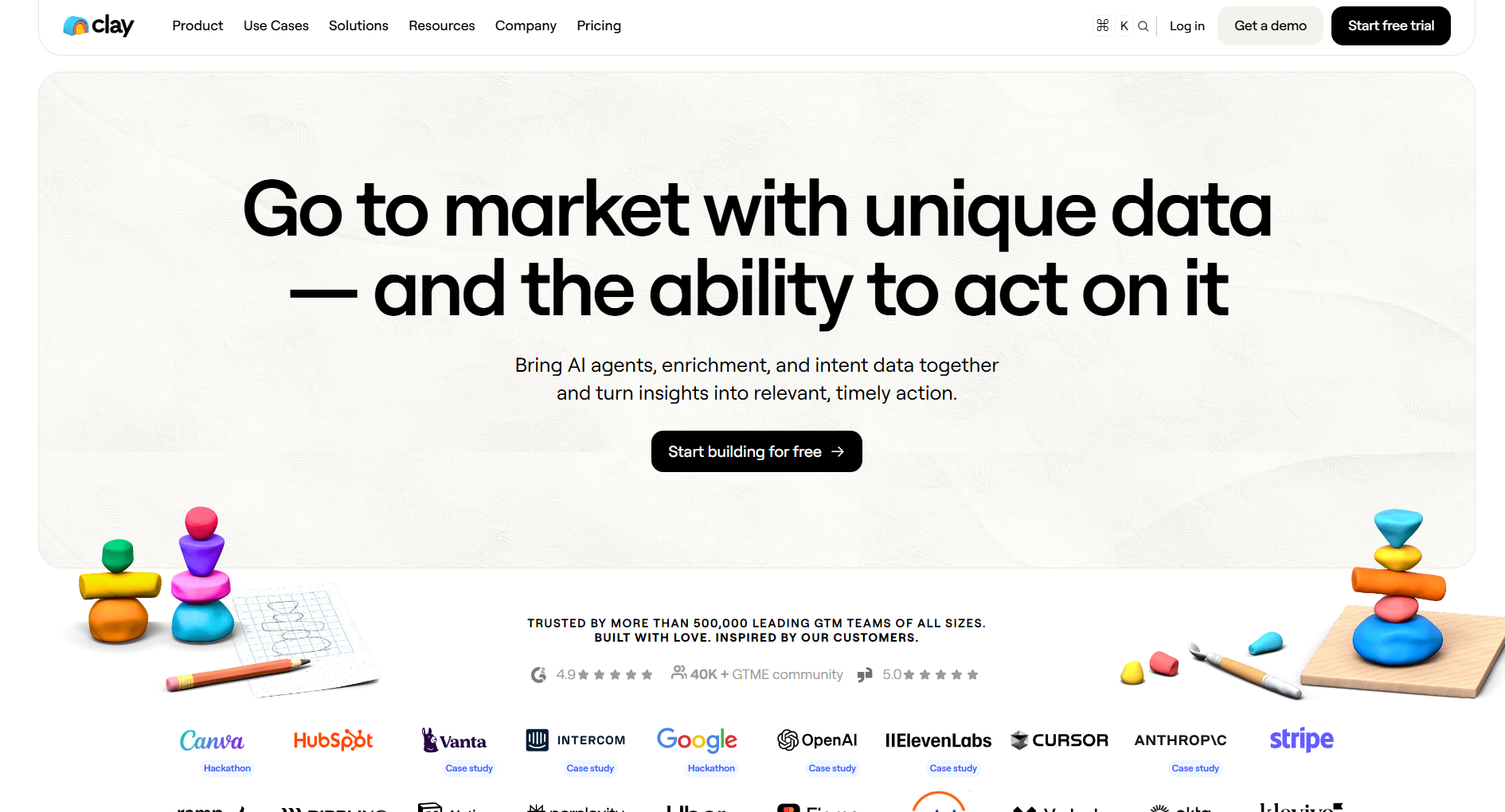
Clay's spreadsheet-style interface connects to 75+ data providers for waterfall enrichment.
Clay feels like it was built for operators who prefer a blank canvas. The spreadsheet-style interface lets you stitch together 75+ enrichment providers into a single waterfall, pulling from Clearbit, Hunter, People Data Labs, and plenty more. If your RevOps team likes writing logic and iterating on workflows, Clay gives you room to do it. Its Claygent AI agent can scrape websites, summarize 10-K filings, and run custom research tasks row by row.
That flexibility comes with real overhead. Clay does not ship with its own proprietary contact database; each enrichment call burns credits from third-party providers, and costs can spike at scale. CRM sync typically runs through Zapier or an API build, not a native connector. Clay shines for growth teams with technical operators who want tight control over enrichment logic, and it tends to be less comfortable for lean sales teams that need something closer to turnkey.
3. Apollo.io
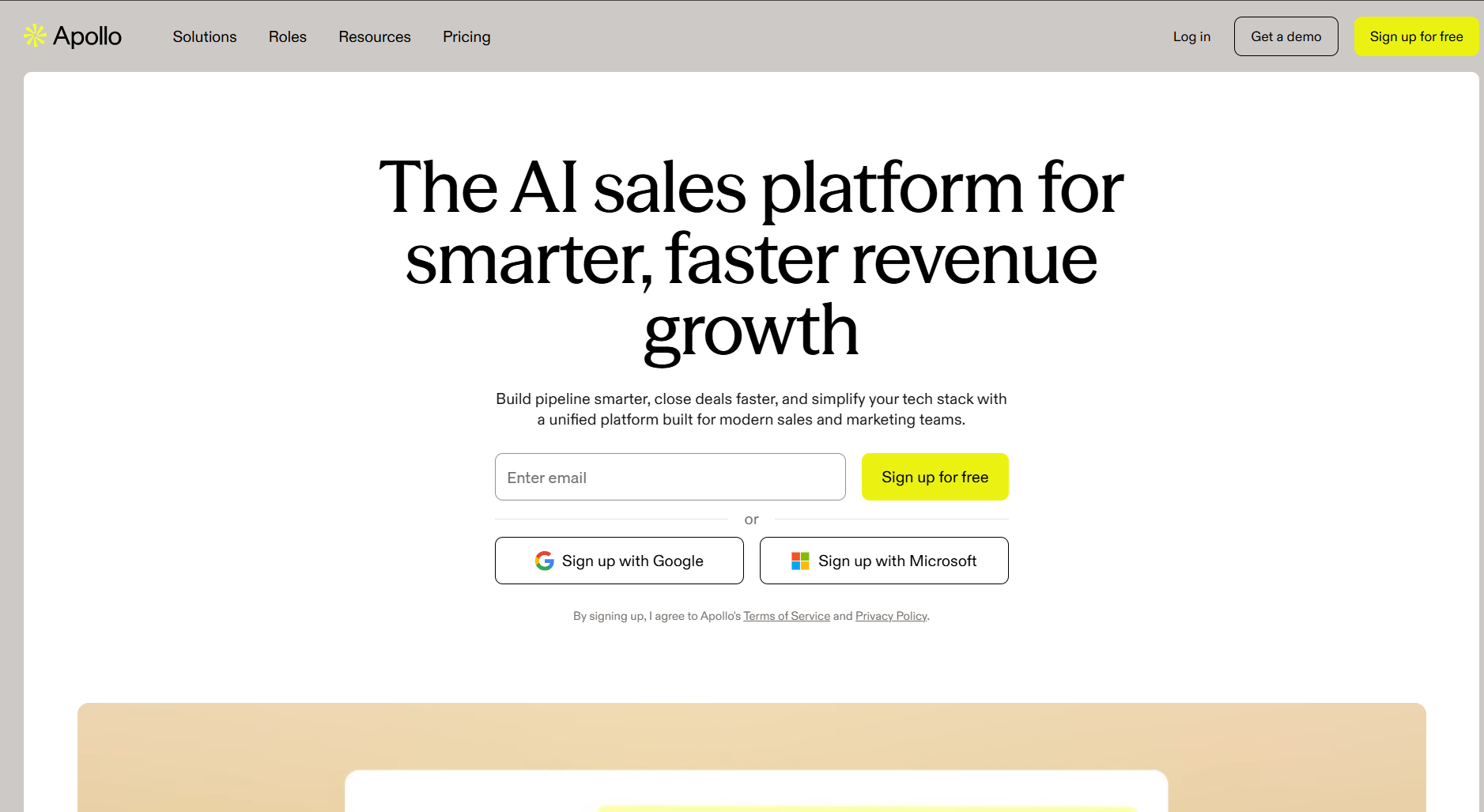
Apollo.io combines a large B2B database with built-in sequencing.
Apollo.io is built for teams that want a database and outbound sequencing in the same place. The free tier includes limited credits, which makes it a practical way for startups to test b2b data enrichment before committing real budget. Apollo's advantage is breadth: a large B2B contact database with emails and direct dials, plus filters for job title, seniority, technology, and funding stage. Native Salesforce and HubSpot integrations keep record syncing straightforward. The gaps show up in waterfall enrichment (Apollo leans heavily on its own database) and in data freshness for niche verticals. When you move down-market or outside its strongest regions, email bounce rates can creep up.
4. Cognism
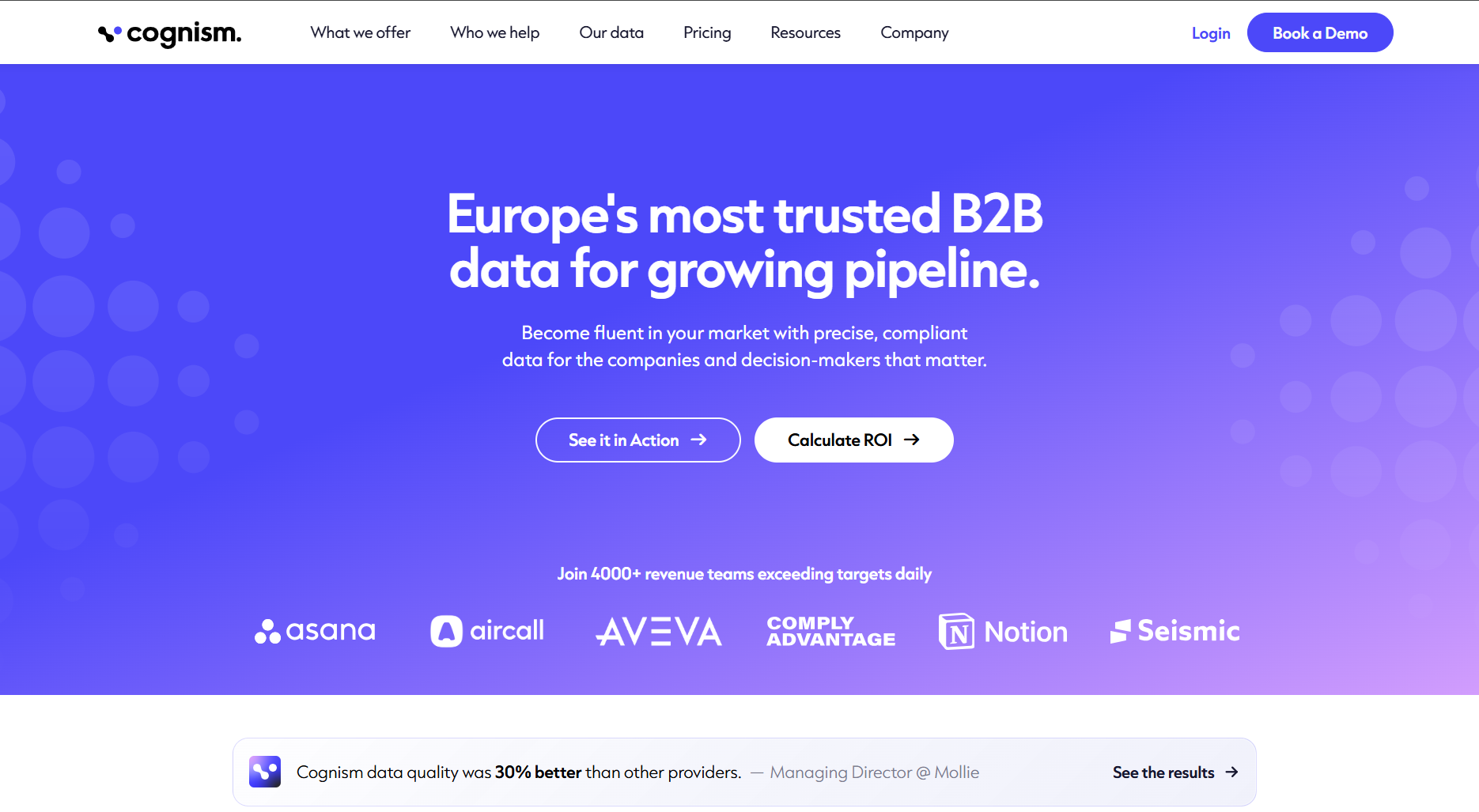
Cognism is known for phone-verified mobile numbers and GDPR compliance.
For teams selling into EMEA, Cognism is hard to ignore. Its Diamond Data product emphasizes phone-verified mobile numbers, which matters if cold calling is doing real work in your motion. Cognism also leans into GDPR and CCPA compliance in its data-collection approach, which helps reduce risk when you operate across regulatory lines. On the enrichment side, it covers firmographics, technographics, and hiring signals. Two constraints come up consistently: pricing is quote-based, and smaller teams often find the starting point steep. Cognism also does not offer native waterfall enrichment, so if you need multi-provider fallback logic, you will be pairing it with an orchestration layer.
5. Lusha
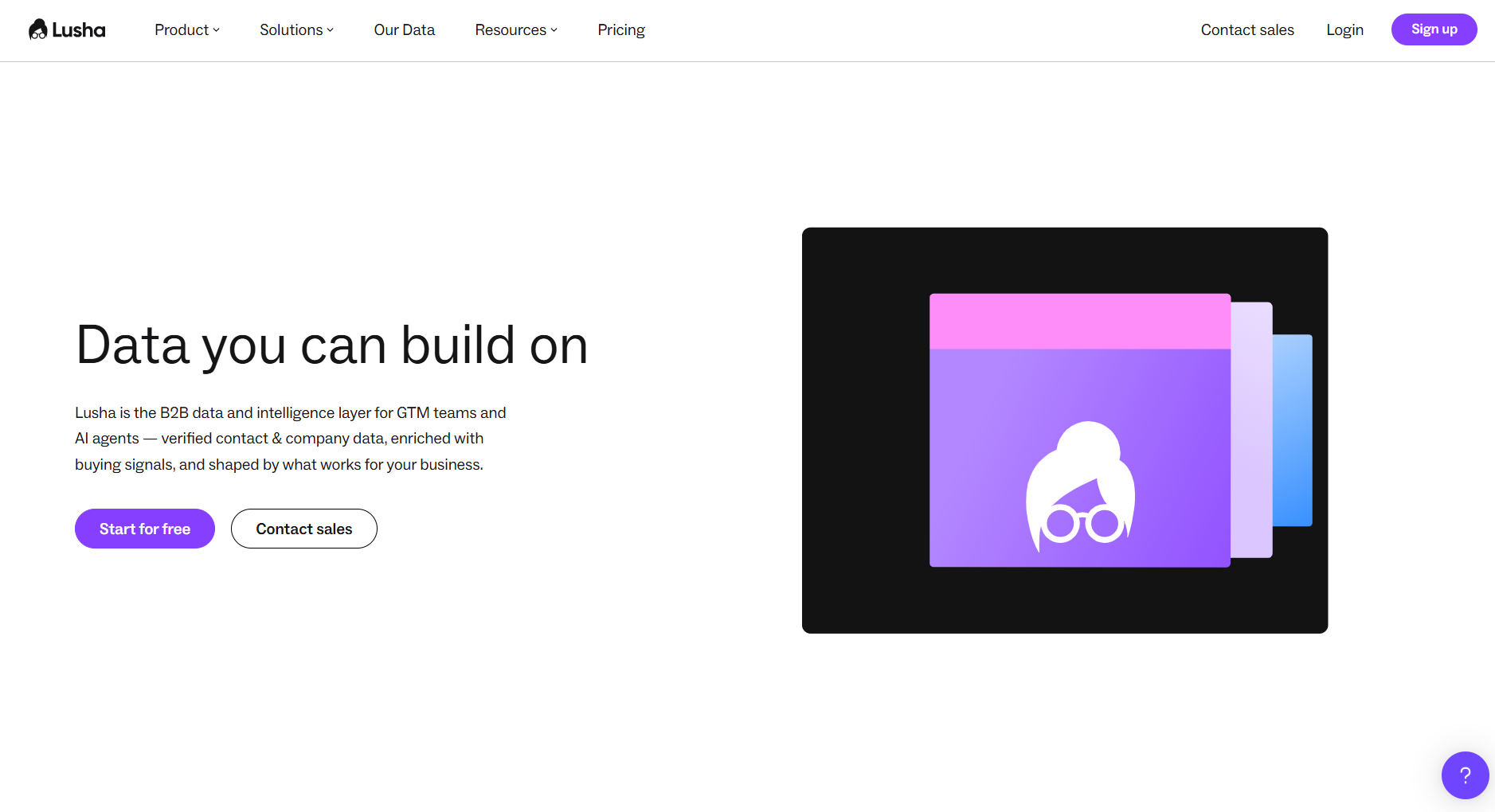
Lusha offers a lightweight browser extension for quick contact lookups.
Lusha optimizes for speed. The Chrome extension pulls contact details straight from LinkedIn in a few clicks, which is why it is popular with reps who need quick lookups more than they need bulk workflows. Pricing tiers are published, and the free plan includes a small monthly credit allotment. If your requirement is a straightforward contact data provider without workflow builders and heavy integrations, Lusha gets the job done. The API supports CRM enrichment and bulk list processing, but automation stays fairly basic compared with platforms like Bitscale or Clay. In most stacks, Lusha plays best as a supplement, not the single source of truth.
6. ZoomInfo
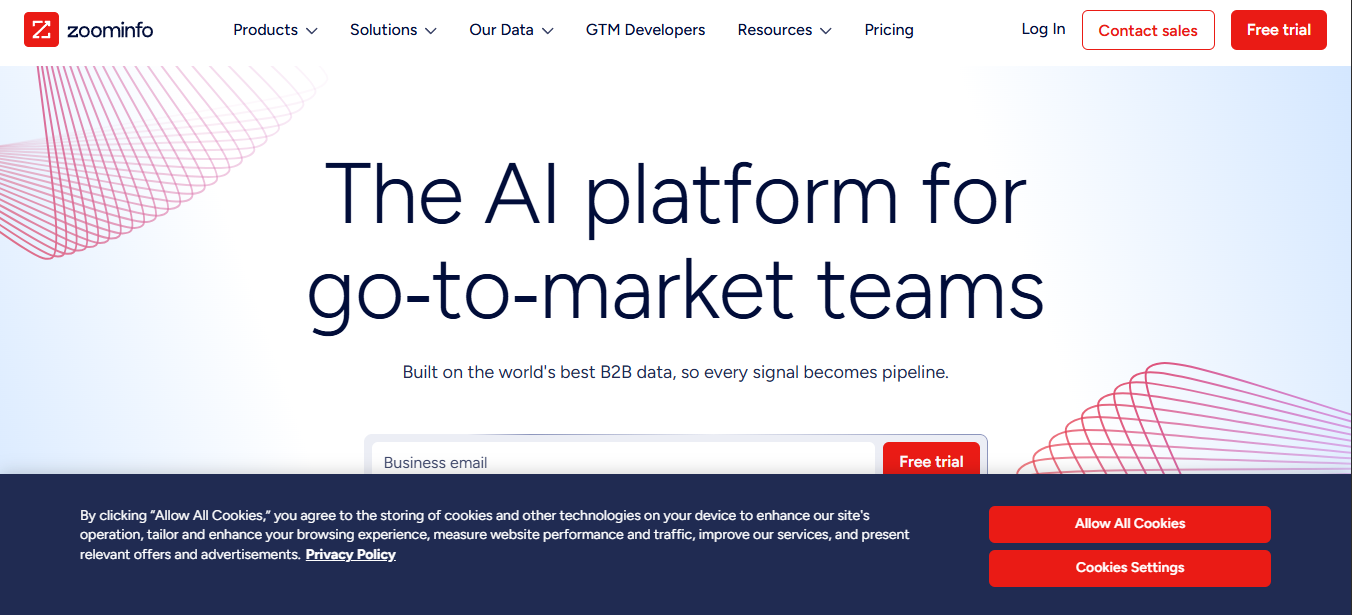
ZoomInfo remains a dominant force in enterprise sales intelligence.
ZoomInfo remains the default choice in a lot of enterprise procurement cycles. The platform offers one of the largest commercially available B2B contact databases, and the product suite bundles intent data, org charts, and workflow automation through ZoomInfo Workflows that can trigger CRM actions off buying signals. Copilot AI is positioned as a layer that surfaces account insights and suggests next steps for reps. If you have a dedicated RevOps function and a six-figure budget line, ZoomInfo's breadth is tough to replicate. The tradeoffs are familiar: multi-year contracts, quote-based pricing, and a platform footprint that can feel oversized for teams under 50 reps. AI-native enrichment platforms continue to increase competition by combining enrichment, workflow automation, and AI-powered prospect research in a single platform, putting pressure on legacy pricing models.
7. Clearbit (Breeze Intelligence by HubSpot)
Breeze Intelligence brings Clearbit's firmographic enrichment natively into HubSpot records.
HubSpot acquired Clearbit in late 2023, and Clearbit now shows up as Breeze Intelligence inside the HubSpot product line. If HubSpot is your CRM, this is about as low-friction as enrichment gets: company enrichment, form shortening, and buyer intent data land directly on HubSpot records with no middleware. Clearbit's firmographic coverage (industry, revenue range, employee count, tech stack) is still a strong point. The tradeoff is lock-in. Breeze Intelligence is packaged into HubSpot pricing, and teams on Salesforce or other CRMs do not get it as a standalone enrichment product. If your stack is HubSpot-centered, it fits naturally; if not, it is the wrong shape of tool.
8. Instantly.ai
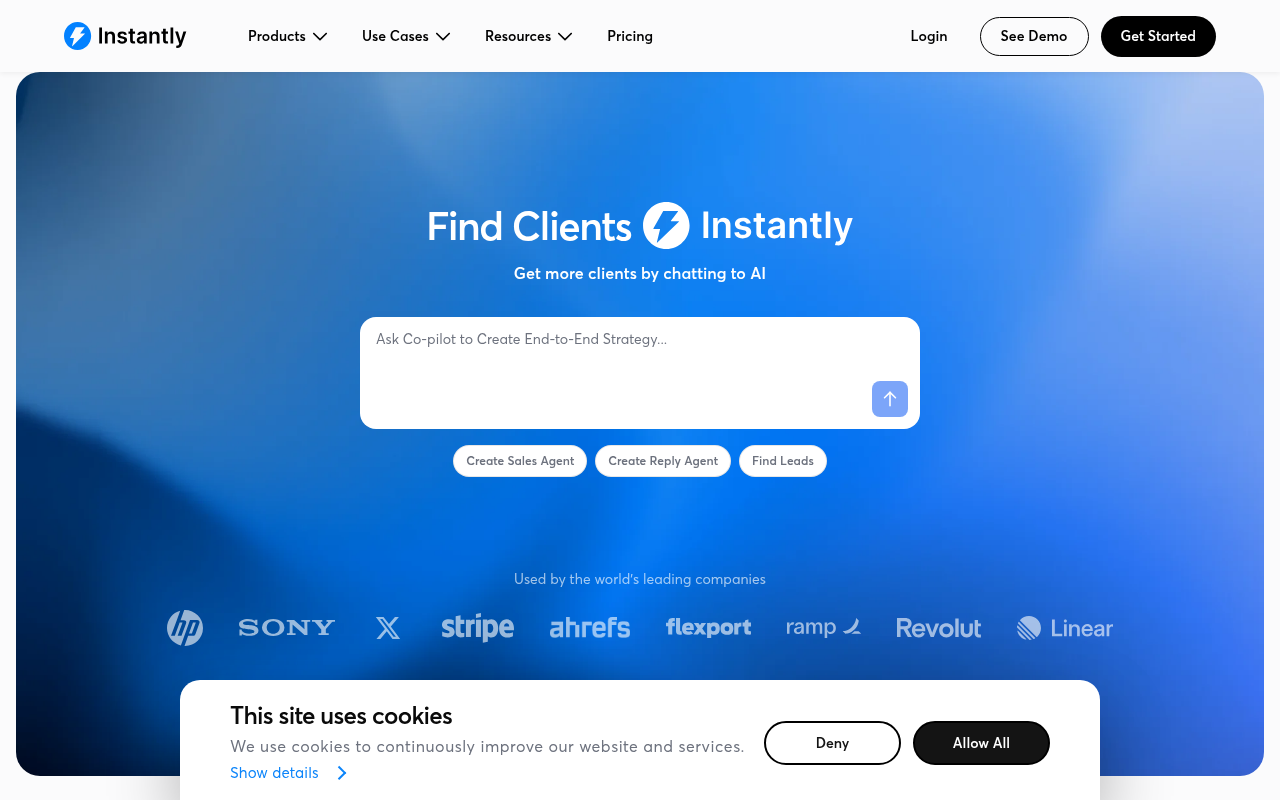
Instantly.ai bundles B2B lead enrichment directly into its cold email campaign builder.
Instantly.ai started as email warmup and sending infrastructure, and it has been steadily expanding into enrichment through its B2B Lead Finder. You get contact-level filters (title, industry, location) and a direct handoff into Instantly's campaign builder, so prospecting and outreach live in the same loop. If your motion is high-volume cold email, that consolidation is attractive. The enrichment side is lighter than dedicated platforms: company enrichment is limited, there is no waterfall logic, and CRM sync is not a core strength. Instantly is a good fit for outbound-first teams that care more about deliverability and sending scale than they do about deep account intelligence.
9. FullEnrich
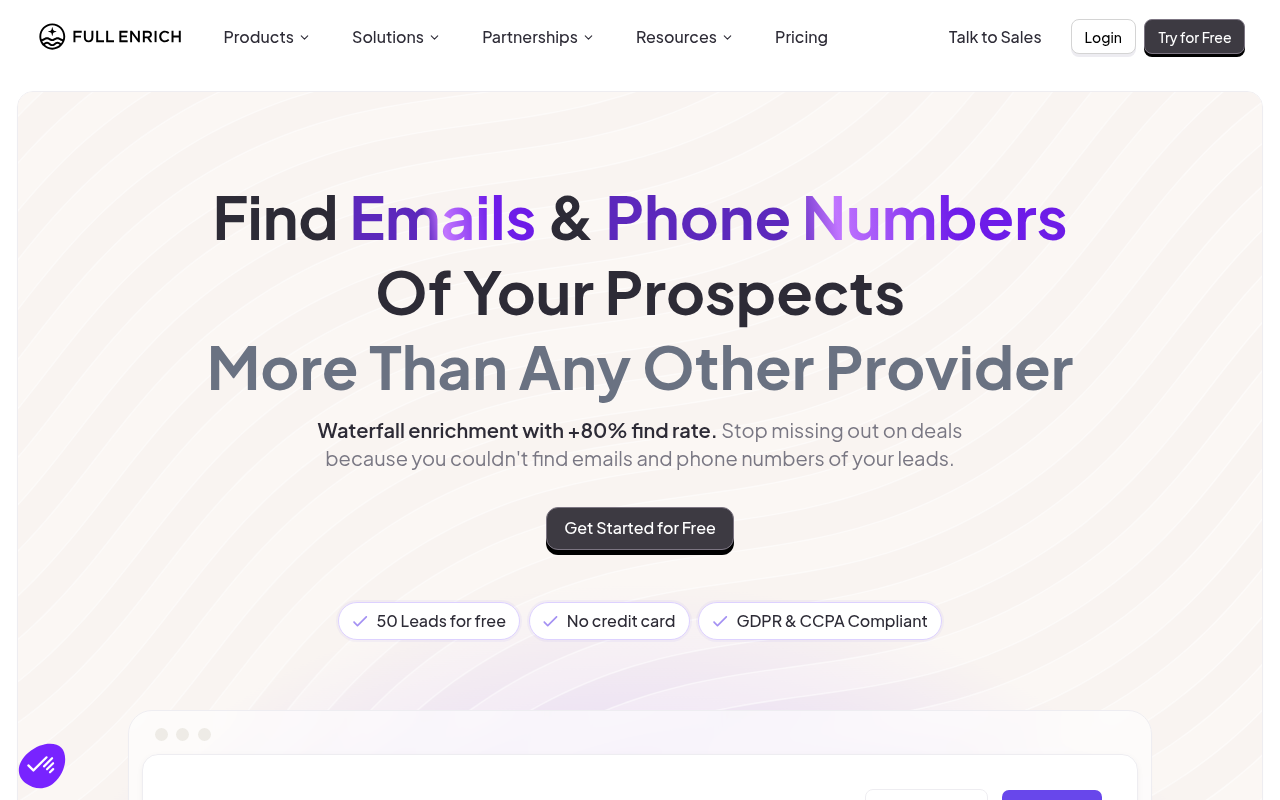
FullEnrich focuses narrowly on waterfall enrichment, querying 15+ providers to maximize contact coverage.
FullEnrich is narrowly focused, and that is the point. It is built around waterfall enrichment, querying 15+ providers in sequence to maximize email and phone match rates. It does not try to double as a CRM, a sequencer, or a sales intelligence suite. If your stack is already mature and you simply need higher coverage on contact fields, FullEnrich is designed to fill that gap. Pricing is credit-based and published. The limitations are the flip side of the focus: company enrichment is basic, workflow automation is minimal, and CRM sync and outbound execution typically live elsewhere.
10. Persana AI
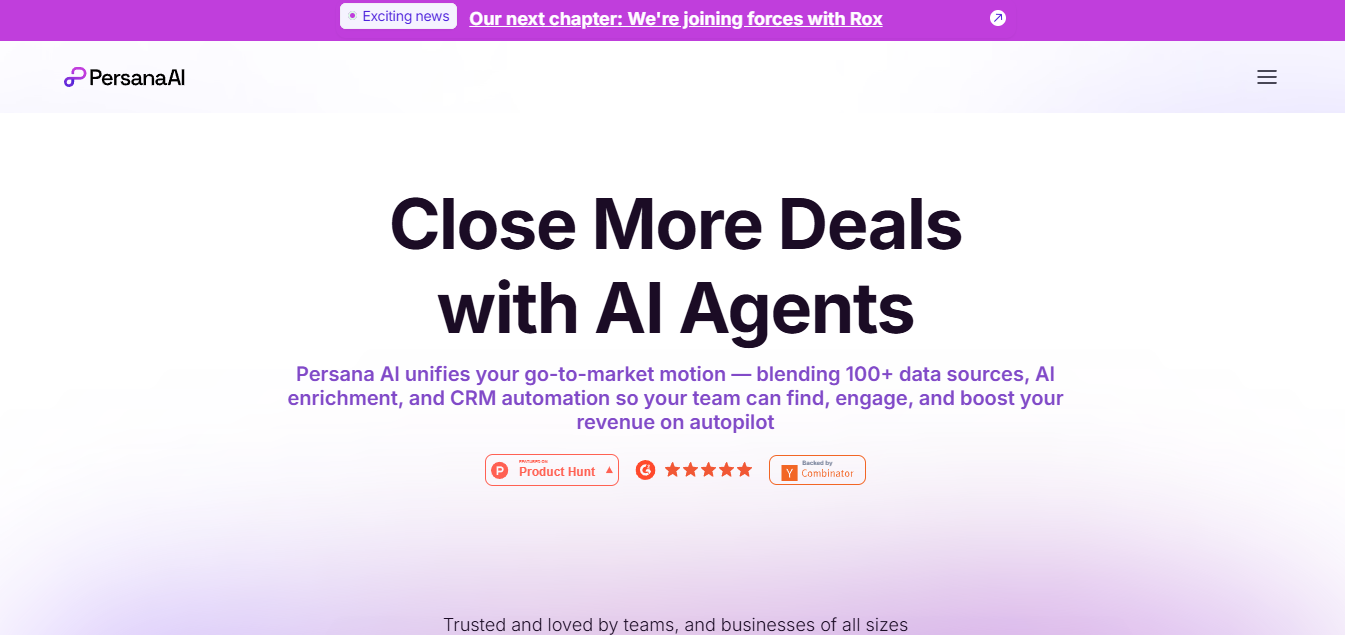
Persana AI uses AI agents to automate enrichment and outbound research.
Persana AI sits in the newer class of AI-native enrichment products. It pairs waterfall enrichment with trigger-driven workflows: job changes, funding rounds, and hiring spikes can kick off enrichment and downstream outreach steps. It integrates with CRMs and outbound tools, and its AI agents can handle prospect research, draft personalized messaging, and score leads. The product is still rounding out enterprise expectations, with areas like advanced permissions and audit logging less mature than what you get from long-established vendors. It tends to fit teams that are comfortable adopting a platform that ships quickly and changes often.
11. LeadIQ
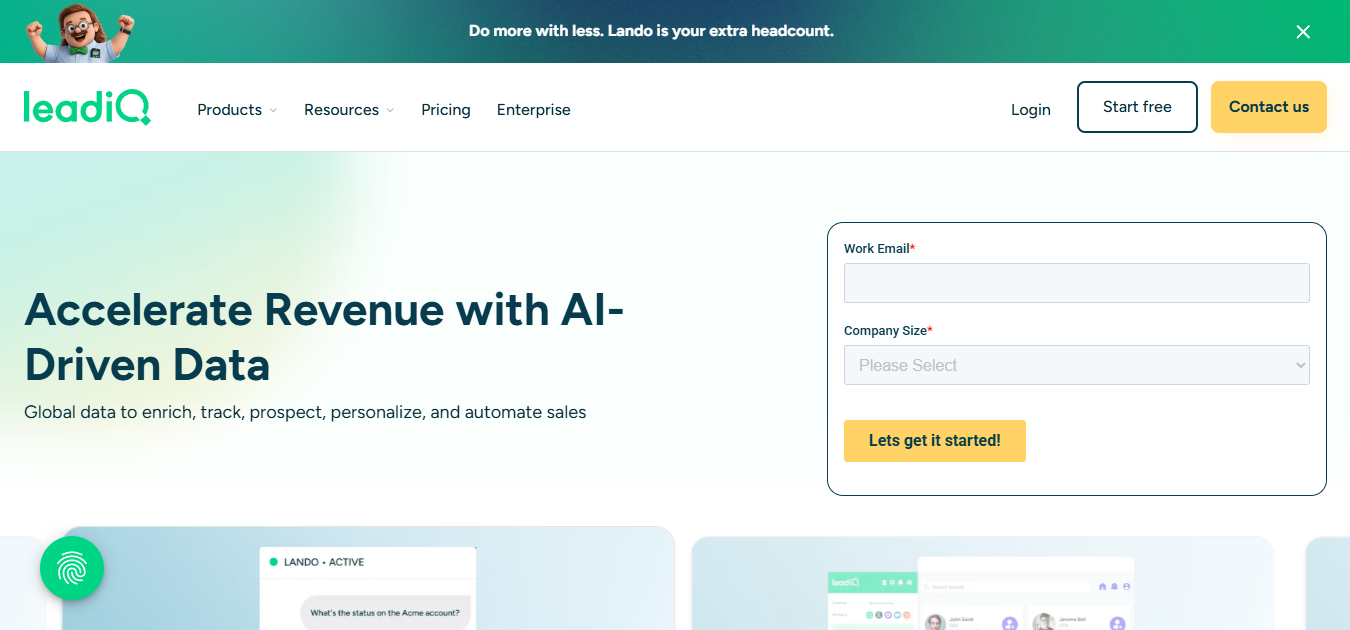
LeadIQ streamlines prospecting with one-click capture from LinkedIn.
LeadIQ is tuned for SDR teams that spend their day in LinkedIn and Salesforce. The browser extension captures contact data from LinkedIn and pushes an enriched record into Salesforce in one click, cutting out the usual copy-paste and manual field entry. Scribe AI drafts personalized email openers based on the prospect's profile. LeadIQ is not trying to be a full enrichment engine: it is strongest at the capture-and-enrich moment during prospecting, and it is lighter on bulk enrichment, waterfall logic, and deep company data. Teams usually get the most value when they pair it with a more robust enrichment layer behind the scenes.
12. Seamless.AI
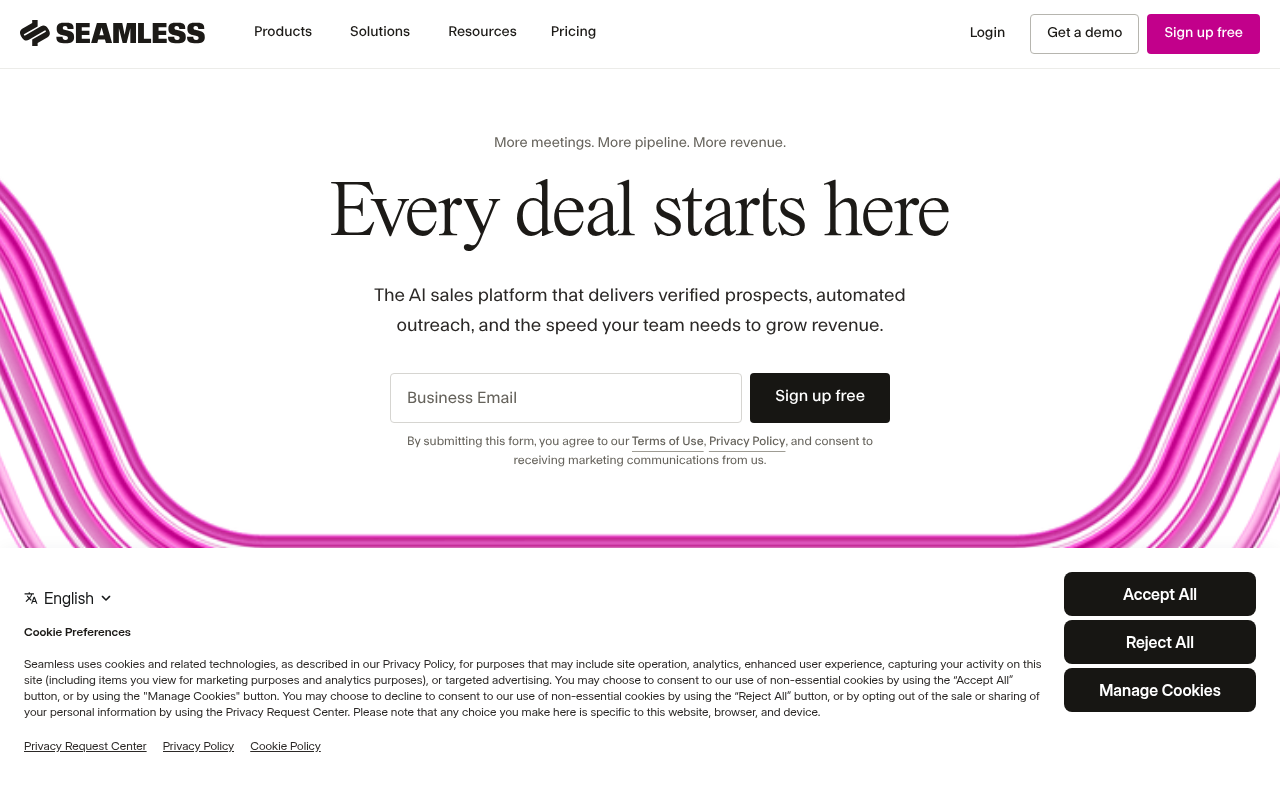
Seamless.AI verifies contact data on demand, making it useful for tracking recent role changes.
Seamless.AI's pitch centers on real-time verification. Instead of relying only on a static database, it searches and verifies contact information when you request it, which can improve accuracy when a prospect has recently changed roles. Autopilot can generate targeted lists from saved search criteria. CRM integrations are native, and the Chrome extension works across LinkedIn and company sites. Pricing usually requires a sales conversation, and some users report uneven quality outside North America. It is a reasonable option for teams that value on-demand freshness more than bulk processing speed.
Basic Enrichment vs. Modern GTM Platform
Not all enrichment products are built for the same job. Some tools are essentially append utilities: they add missing fields and stop there. Modern GTM enrichment platforms go a step further, wiring enrichment into routing, scoring, sequencing, and signal-based workflows so the data actually turns into action. Getting clear on that difference up front prevents a common mistake: buying something that improves your records but does not move your pipeline.
| Capability | Basic Enrichment Tool | Modern GTM Enrichment Platform |
|---|---|---|
| Contact data append | Yes | Yes |
| Company firmographics | Limited | Comprehensive |
| Waterfall enrichment | Rarely | Built-in or supported |
| CRM sync (bi-directional) | Manual or CSV | Native, scheduled |
| Workflow automation | None | Pre-built and custom |
| Buying signals / intent | No | Integrated |
| AI prospect research | No | Yes |
| Outbound tool integration | Basic export | Native connectors |
| Scalability | Credit-limited | Tiered for growth |
| Teams running multi-channel outbound and ABM typically need a platform, not just a tool. |
If your team is building a prospecting stack in 2026, a platform approach can reduce integration sprawl and keep enrichment flowing through the system without constant manual handoffs.
Best Enrichment Platform by Team Type
| Team Type | Recommended Platform | Why |
|---|---|---|
| Growth-stage team (10-50 reps) | Bitscale | Unified enrichment, signals, workflows, and CRM sync without stitching tools |
| Early-stage startup (< 10 reps) | Apollo.io or Lusha | Free tiers, low setup friction, built-in sequencing (Apollo) |
| Enterprise (50+ reps, dedicated RevOps) | ZoomInfo or Cognism | Deep databases, intent data, advanced workflow automation, compliance |
| Technical / PLG ops team | Clay | Maximum flexibility, 75+ provider waterfall, custom logic |
| Cold email-first team | Instantly.ai | Sending infrastructure, warmup, and enrichment in one platform |
| HubSpot-native team | Clearbit (Breeze Intelligence) | Zero-friction CRM enrichment inside HubSpot |
| Teams needing max coverage | FullEnrich or Bitscale | Waterfall enrichment across multiple providers for highest match rates |
| SDR prospecting team | LeadIQ | One-click LinkedIn capture to Salesforce with AI email drafts |
| Match the platform to your team's primary workflow, not just your data volume. |
How to Choose the Right Enrichment Software
Choosing an enrichment platform is less about a single accuracy score and more about how you want your revenue architecture to behave. It shapes CRM hygiene, outbound throughput, and whether your team can act on signals without building a Rube Goldberg machine of handoffs. Start with the friction you can see. If reps burn 30 minutes per prospect on manual research, prioritize AI prospect research and prebuilt workflows. If bounce rates are running above acceptable thresholds, you need waterfall enrichment or a provider with stronger verification. If your CRM is packed with stale records, look for scheduled crm enrichment with automated refresh cycles.
API quality is usually the quiet differentiator. If you expect to trigger enrichment from product events, build custom integrations, or feed enriched fields into a warehouse, you want an API that is well-documented and friendly to real-world rate limits. Bitscale, Clay, Apollo, and ZoomInfo all offer robust APIs, though the documentation depth is not uniform. If you are comparing alternatives for enrichment and prospecting, do not decide from a demo alone: test match rates against your own ICP before you sign an annual contract.
Verdict: Matching Platform to Motion
There is no universal winner in enrichment. ZoomInfo and Cognism set the pace at the enterprise tier with database depth and compliance posture. Clay is the choice when you want orchestration freedom and do not mind building. Apollo.io and Lusha keep the barrier low for startups. Instantly.ai is built around the cold-email workflow. Bitscale is positioned for growth-stage teams that want enrichment, sales intelligence, buying signals, and workflow automation in one place, so you are not managing (or paying for) a patchwork of point solutions. The right pick comes down to team size, primary GTM motion, your CRM ecosystem, and how much complexity your operators can realistically own.
Frequently Asked Questions
What is the difference between contact enrichment and company enrichment?
Contact enrichment fills in person-level fields like work email, phone number, job title, and a LinkedIn URL. Company enrichment focuses on the account: industry, revenue, employee count, tech stack, and funding history. Most vendors offer both, but company enrichment depth varies a lot, especially once you get beyond basic firmographics.
How does waterfall enrichment improve data coverage?
Waterfall enrichment runs multiple providers in sequence. When the first provider cannot return an email or phone, the system automatically tries the next one, and keeps going until it finds a match or runs out of sources. This fallback pattern generally delivers higher data coverage than relying on a single provider because it automatically queries multiple sources until a match is found. Clay, Bitscale, and FullEnrich support waterfall logic natively.
Can enrichment software integrate with my existing CRM?
Most modern enrichment platforms offer native integrations for Salesforce and HubSpot. Some also support Pipedrive, Microsoft Dynamics, and custom CRMs via API. When you evaluate CRM sync, look past "it integrates" and confirm bi-directional sync, field mapping, deduplication, and scheduled refresh cycles, not just a one-time push.
How often should I re-enrich my CRM data?
With B2B data decaying at roughly 22.5% per year (HubSpot, 2026), many organizations refresh CRM data quarterly, while teams running high outbound volume often adopt monthly or continuous enrichment based on how frequently their customer data changes. Trigger-based enrichment, where records update automatically after events like a site visit or a new funding round, is becoming more common as platforms add signal-driven workflows.
Is enrichment software worth the investment for small teams?
It can be, but the starting point matters. Small teams often do best with free tiers or low-cost plans (Apollo.io, Lusha), then move up to a broader platform as their motion matures. The payoff usually shows up in fewer bounces, faster prospecting, and less time burned on manual research.

Sanket
CEO | Co-Founder Bitscale


Sanket is the CEO and Co-Founder of Bitscale. He leads company vision and strategy, building the future of AI-driven sales intelligence for modern B2B teams. Sanket is obsessed with the intersection of AI and go-to-market, and has spent years studying how the best B2B companies find, engage, and convert customers at scale. He writes about company building, product strategy, and where AI is taking the sales industry.
Read other blogs
All Blogs
12 Best CRM Sync Tools for Revenue Teams in 2026
Compare 12 CRM sync tools for Salesforce and HubSpot, including enrichment, reverse ETL, and automation options for cleaner revenue data.

Sales Data Enrichment: A Buyer's Guide for Modern B2B Teams
Sales data enrichment helps B2B teams improve CRM records, routing, prospecting, and account prioritization. Compare workflows, costs, and vendor fit today.

What Is AI Prospect Qualification? A Practical Guide for Modern Revenue Teams
AI prospect qualification helps revenue teams enrich data, assess ICP fit, prioritize buying signals, and route the right accounts into CRM workflows.