12 Best AI Lead Generation Solutions for B2B Teams in 2026
Table of Contents
Explore Bitscale
Find decision makers, more insights and contact information about this company on Bitscale
AI lead generation is no longer about exporting a static CSV from a contact database and hoping it holds up. AI has become a standard part of modern B2B prospecting, helping revenue teams automate prospect discovery, contact enrichment, lead qualification, CRM synchronization, and outbound execution. That shift has changed expectations: B2B teams now want tools that can find prospects, enrich records as they change, surface buying signals, sync clean data into the CRM, and kick off outbound sequences without a chain of manual handoffs.
This piece breaks down 12 AI lead generation tools built for B2B revenue teams. Each one is evaluated on the things RevOps ends up owning: prospect discovery, contact and company enrichment, buying signals, CRM synchronization, workflow automation, AI research, integrations, pricing transparency, scalability, and where it fits day-to-day. A two-person SDR pod and a 200-seat sales org will not buy the same ai lead generation software, and they should not. Below are 12 leading AI lead generation platforms evaluated using consistent criteria.
How AI Transformed B2B Lead Generation
Old-school b2b lead generation was a grind: bought lists, manual LinkedIn hunting, and batch-and-blast email. Reps burned hours verifying emails, piecing together company context, and making educated guesses about who might be in-market. AI sales prospecting changes the starting point. Instead of beginning with a list, the better platforms begin with signals: job changes, funding rounds, tech stack shifts, hiring patterns, and content engagement. From there they assemble living prospect lists, enrich each record with firmographic and technographic data, and push qualified leads straight into the CRM or into outbound sequences.
| Dimension | Traditional Approach | AI-Powered Approach |
|---|---|---|
| Prospect Discovery | Manual search, purchased lists | Signal-driven, real-time identification |
| Contact Enrichment | Batch uploads, periodic refresh | Continuous, multi-source waterfall enrichment |
| Buying Signals | Anecdotal, rep intuition | Intent data, job changes, funding alerts |
| CRM Sync | Manual import/export | Bi-directional, automated CRM enrichment |
| Outbound Automation | Separate tools, manual triggers | Integrated sequences triggered by signals |
| Personalization | First name merge tags | AI-researched, account-specific messaging |
| Scalability | Linear (more reps = more output) | Workflows scale efficiently without requiring proportional headcount growth |
| The gap between legacy and AI-powered lead gen continues to widen in 2026. |
AI adoption in B2B marketing and sales operations has accelerated rapidly, with most revenue teams now using AI-powered tools for at least some part of their prospecting, enrichment, or outreach workflows. Organizations that integrate AI into lead generation often improve operational efficiency by reducing manual prospecting, improving CRM data quality, and helping revenue teams prioritize higher-value opportunities. The tools below are strong options for teams that want to build a prospecting stack in 2026 without turning RevOps into a full-time integration project.
Platform Feature Comparison
| Platform | AI Discovery | Contact Enrichment | Company Enrichment | Buying Signals | CRM Sync | Workflow Automation | Pricing Transparency |
|---|---|---|---|---|---|---|---|
| Bitscale | Yes | Yes (waterfall) | Yes | Yes | Yes | Yes (pre-built) | Public tiers |
| Clay | Yes | Yes (waterfall) | Yes | Limited | Via integrations | Yes (custom) | Public tiers |
| Apollo.io | Yes | Yes | Yes | Yes | Yes | Yes | Public tiers |
| Cognism | Yes | Yes (phone-verified) | Yes | Yes (intent) | Yes | Limited | Custom quotes |
| Lusha | Yes | Yes | Yes | Yes | Yes | Limited | Public tiers |
| Instantly.ai | Yes | Yes | Limited | Limited | Limited | Yes (email) | Public tiers |
| ZoomInfo | Yes | Yes | Yes | Yes | Yes | Yes | Custom quotes |
| Seamless.AI | Yes | Yes | Yes | Limited | Yes | Limited | Custom quotes |
| UpLead | Limited | Yes | Yes | No | Yes | No | Public tiers |
| Leadfeeder | Yes (website visitors) | Limited | Yes | Yes | Yes | Limited | Public tiers |
| Outreach | No | No | No | Yes | Yes | Yes | Custom quotes |
| 6sense | Yes | Limited | Yes | Yes (intent) | Yes | Yes | Custom quotes |
| Feature comparison based on vendor websites and documentation as of mid-2026. |
1. Bitscale
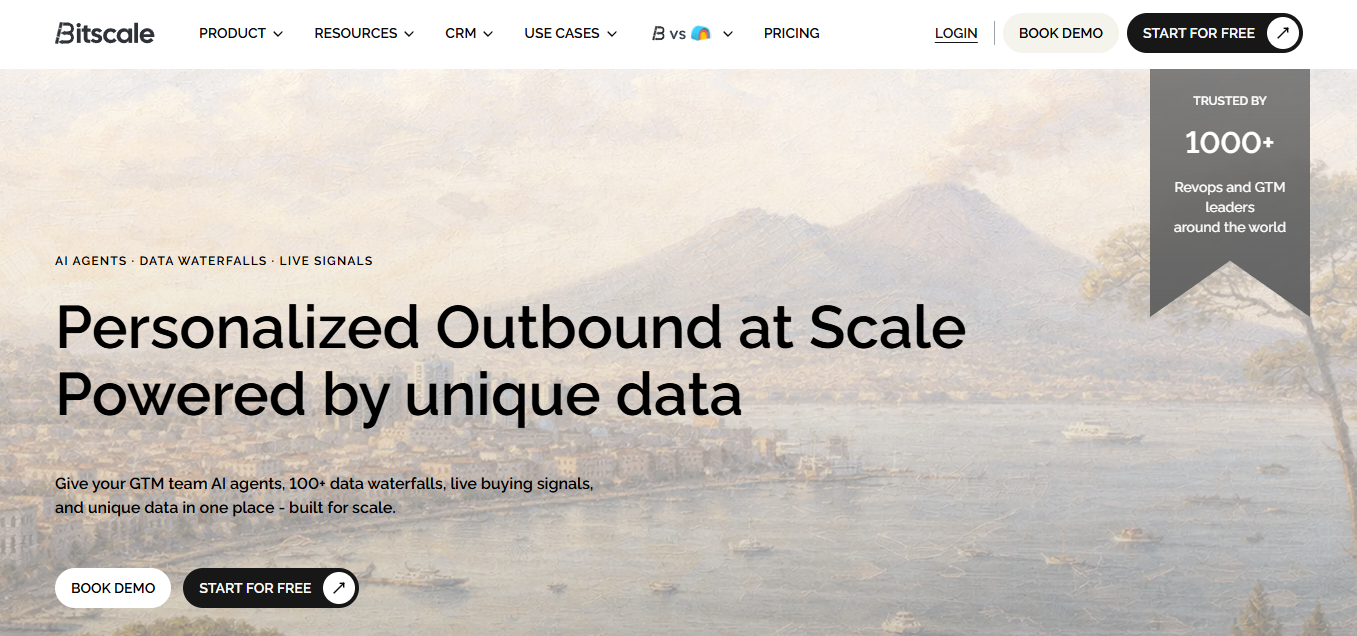
Bitscale unifies AI prospecting, enrichment, signals, and CRM sync in one GTM platform.
Bitscale positions itself as a unified GTM platform, and it largely delivers on that promise. Instead of duct-taping together a half-dozen point tools, you get AI prospect research, waterfall contact enrichment, company enrichment, buying signal tracking, CRM sync, and outbound integrations in one workspace. The pre-built sales workflows are a notable differentiator: rather than assembling automations from scratch, you start with a template (for example, "enrich new Salesforce leads with phone and email, then push to Outreach") and tailor it to your rules.
Bitscale makes sense for mid-market and growth teams because it pairs sales intelligence solutions with automation you can actually operationalize. The value is not just having more data; it is having data that reliably turns into next steps. CRM enrichment runs continuously so reps are not stuck working stale records. Intent and buying signals highlight accounts showing real purchase behavior, and those accounts can be routed into sequences automatically. Bitscale's pricing is published in clear tiers, a welcome change in a category that often hides behind "contact sales."
Limitations: Bitscale depends on integrations with tools like Outreach or Instantly for outbound execution rather than offering a native email sender. If you want a single, self-contained cold email platform, you will still need a companion tool. Ideal for: Revenue teams that want one platform for prospecting, enrichment, signals, and CRM sync without babysitting a sprawling multi-tool stack.
2. Clay
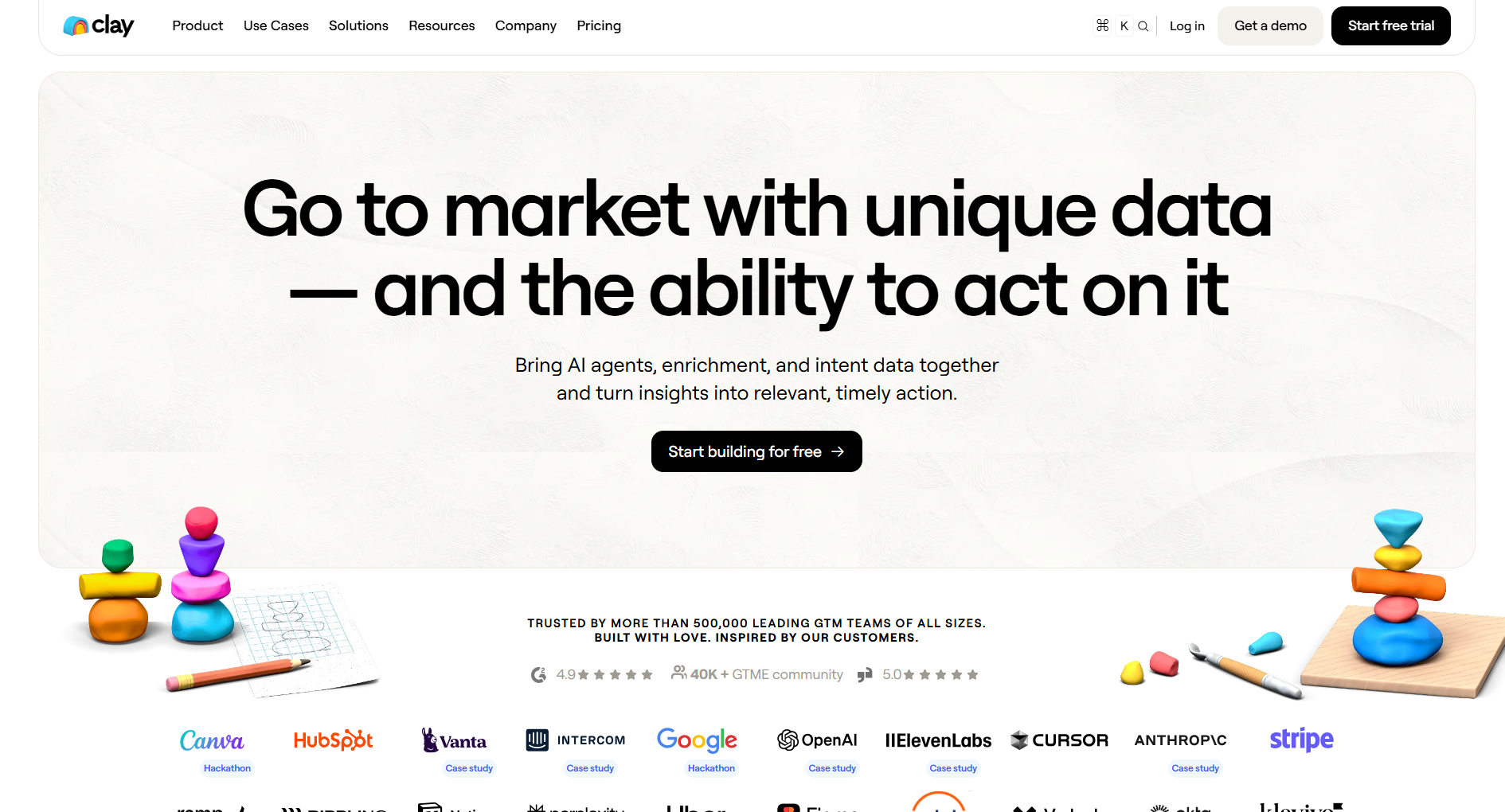
Clay's spreadsheet-style interface lets teams build custom enrichment workflows.
Clay is where power users go when they want to build exactly the workflow they have in mind. The spreadsheet-style UI connects to a wide range of data providers via waterfall enrichment, querying multiple sources per contact and returning the first verified hit. You can get extremely specific: import from LinkedIn Sales Navigator, enrich with Clearbit, score with a custom formula, then push into HubSpot. That flexibility is real, and so is the learning curve. Without a dedicated RevOps owner, setup time can drag. Clay's AI agent (Claygent) can browse the web to research prospects, which helps with personalization that static databases rarely capture. Pricing includes a free tier and scales with credits. Ideal for: Ops-heavy teams and agencies that want maximum control over ai prospecting workflows.
3. Apollo.io
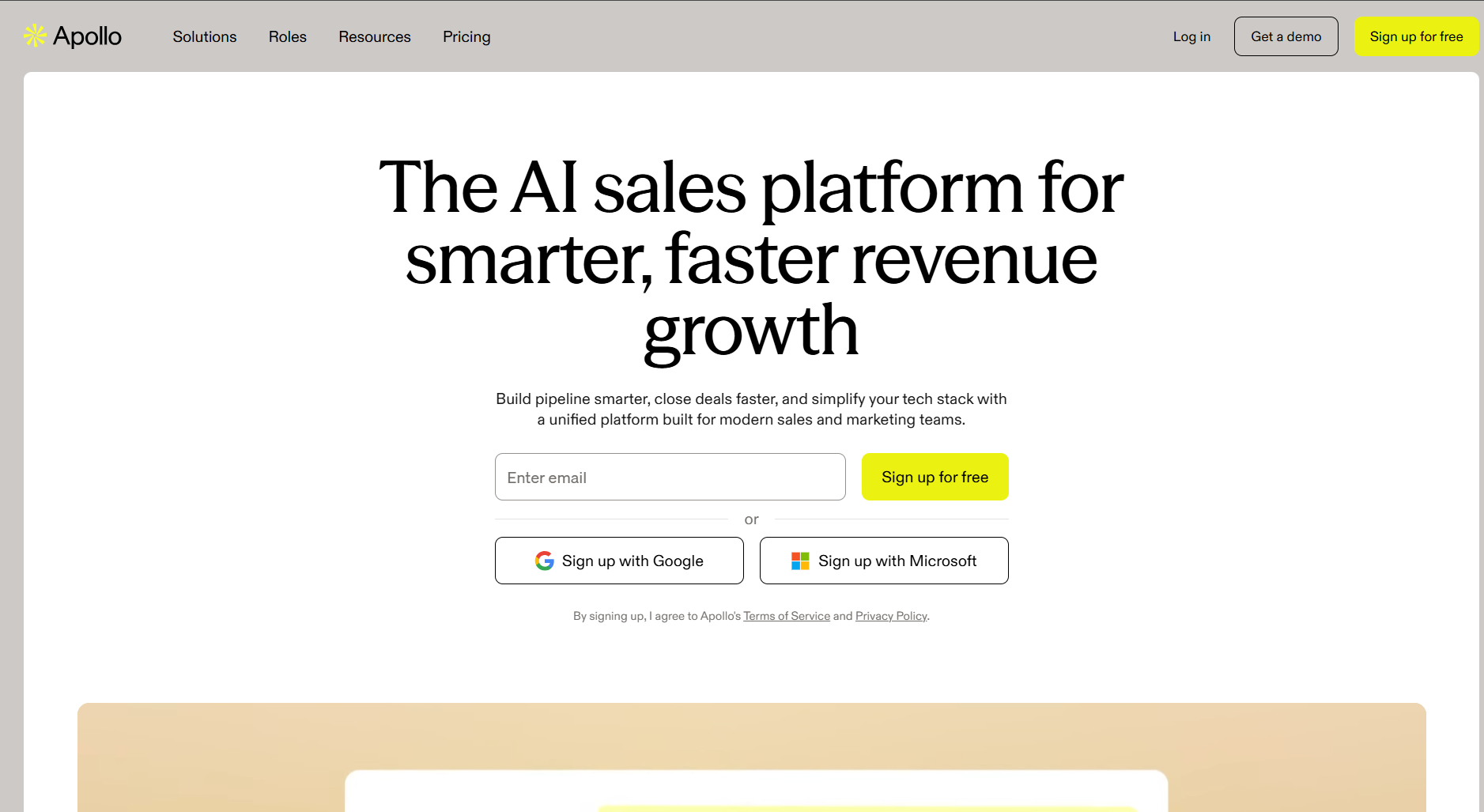
Apollo.io combines a large contact database with built-in sequencing.
Apollo.io stays popular because it bundles what most small teams need: a sizable contact database, email sequencing, a dialer, and basic intent signals, all at a price that does not look like enterprise software. The free tier is usable for solo founders validating outbound, while paid plans open up deeper filters, buying intent data, and API access. Apollo's AI-assisted email writing and sequence optimization have gotten noticeably better over the last year. The trade-offs are familiar: phone data is less dependable than phone-verified providers like Cognism, and Apollo's ubiquity means many prospects are already receiving Apollo-sourced outreach. Ideal for: Startups and SMBs that want an all-in-one lead generation software platform without enterprise pricing.
4. Cognism
Cognism differentiates on phone-verified mobile numbers and GDPR compliance.
If cold calling is a real part of your motion, Cognism is hard to ignore. Its Diamond Data includes phone-verified mobile numbers, meaning a human has confirmed the number reaches the right person. For teams selling into Europe, Cognism's GDPR posture and compliance infrastructure are a meaningful differentiator. Cognism also integrates Bombora intent data, letting you layer buying signals on top of your lists. Cognism's pricing is custom-quoted, which makes side-by-side comparisons harder, and workflow automation is thinner than what you get from Bitscale or Clay. Ideal for: Teams with phone-heavy outbound motions, especially those selling into EMEA markets where compliance is non-negotiable.
5. Lusha
Lusha focuses on simplicity and fast contact lookups.
Lusha wins on speed. The browser extension lets reps pull verified emails and direct dials from LinkedIn profiles in seconds, which is exactly what many teams want. Lusha has grown beyond the extension into list building, intent data, and CRM integrations, but its core pitch has not changed: quick, reliable contact data with minimal friction. The API is solid if you want to wire enrichment into custom processes. Where it falls short is depth. You are not getting the workflow automation or AI research you would expect from Bitscale or Clay. If your sequencing is already handled elsewhere and you just need dependable enrichment, Lusha does the job. Ideal for: Individual reps and small teams that value speed over workflow complexity.
6. Instantly.ai
Instantly.ai serves as a deliverability-first sending layer for high-volume cold email campaigns.
Instantly.ai is built for outbound execution, specifically high-volume cold email with deliverability controls that most teams do not want to manage manually. It automates warmup, inbox rotation, and sending limits, which removes the biggest technical bottleneck in cold outbound. Instantly has bolted on a lead database and basic enrichment, but those features are secondary to the email engine. If you treat Instantly as the sending layer, it makes sense: it handles deliverability and throughput well, and it expects upstream tools (like Bitscale or Clay) to handle discovery and deeper enrichment. Instantly offers transparent subscription pricing with multiple plans designed for different team sizes. Ideal for: Agencies and teams running high-volume cold email campaigns that need deliverability-first infrastructure.
7. ZoomInfo
ZoomInfo remains the enterprise standard for B2B contact and company intelligence.
ZoomInfo is still the incumbent, and its surface area remains tough to match: contact and company intelligence, intent, website visitor tracking, conversation intelligence via Chorus, and engagement tooling. Its 2025-2026 push into AI-generated account summaries and automated play recommendations shows it is not standing still. The sticking point is cost and operational overhead. ZoomInfo is generally positioned at the enterprise end of the market with custom pricing, and the product is complex enough that most teams need dedicated ops support to get full value. If you are already deep in the ZoomInfo ecosystem, switching is painful. If you are evaluating from scratch, the ROI math is less obvious now that lower-cost tools have narrowed the data-quality gap. Ideal for: Enterprise sales organizations with the budget and ops capacity to run a full-suite sales intelligence platform.
8. Seamless.AI
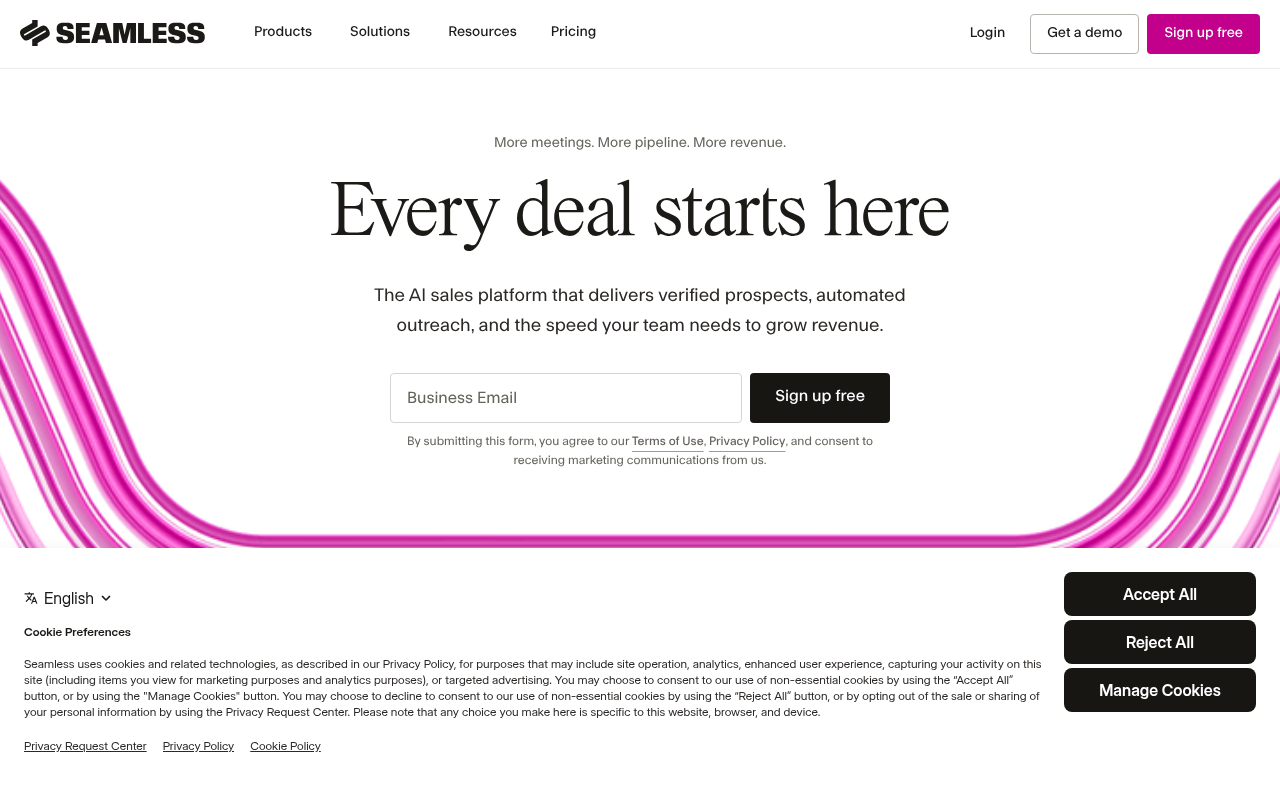
Seamless.AI finds and verifies contact data in real time, keeping B2B prospect lists fresher than static databases.
Seamless.AI leans away from the traditional static database model. It searches for and verifies contact information in real time instead of relying entirely on pre-stored records. That approach tends to keep data fresher, though verification speed can vary depending on what it is finding. You get a Chrome extension, list building, and CRM integrations. Most plans are custom-quoted, which makes budgeting harder than it needs to be. Seamless.AI fits teams that care most about email accuracy and want straightforward prospecting without Clay-level workflow building or Bitscale's broader GTM scope. Ideal for: Mid-market teams running email-first outbound that prefer real-time verified data.
9. UpLead
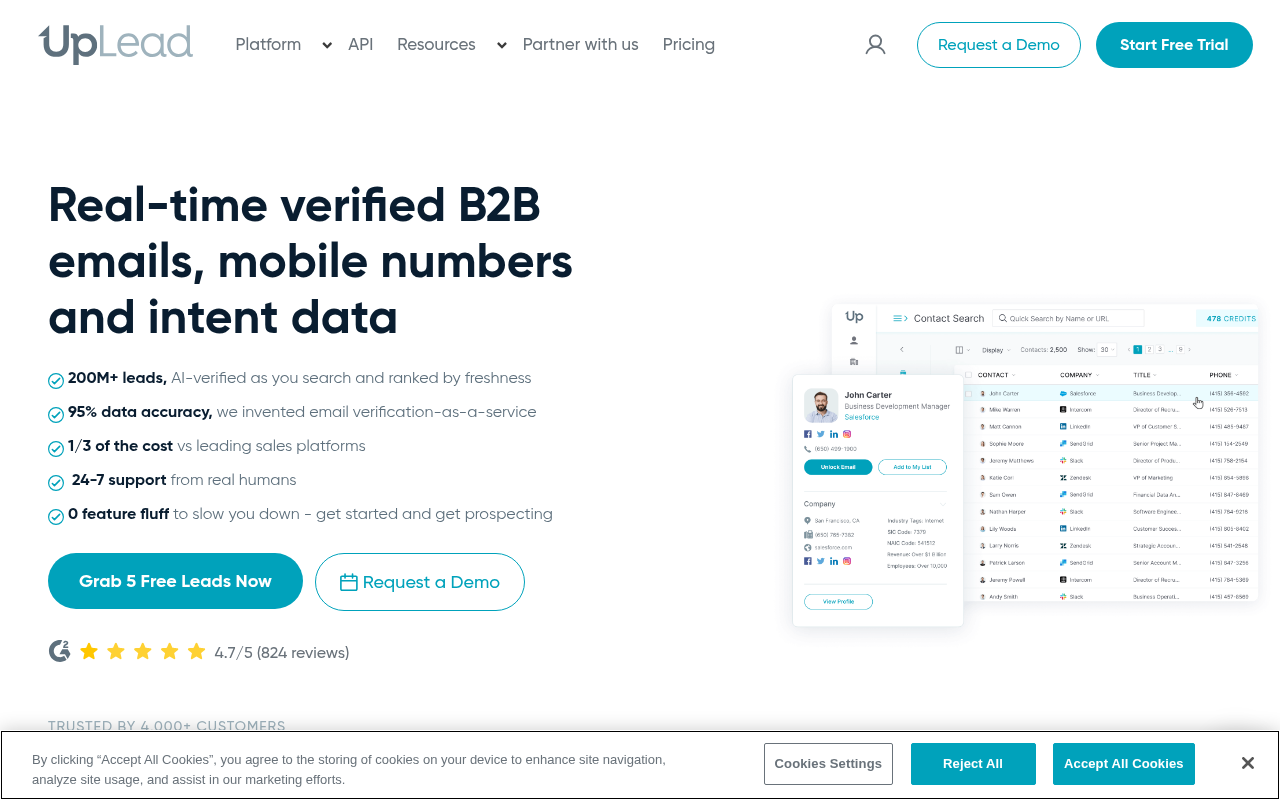
UpLead keeps ai lead generation simple with verified contacts and transparent pricing.
UpLead is the straightforward pick, and that is the appeal. It offers a clean B2B contact database with real-time email verification, technographic filters, and CRM integrations. You will not find an AI research agent, a workflow builder, or intent data here. You are buying verified contact data at a transparent price point (see UpLead pricing for current plans and tiers). If you already have an outbound stack and just need a reliable stream of emails and direct dials, UpLead keeps it simple. Ideal for: Budget-conscious teams that need a dependable contact database without platform complexity.
10. Leadfeeder (by Dealfront)
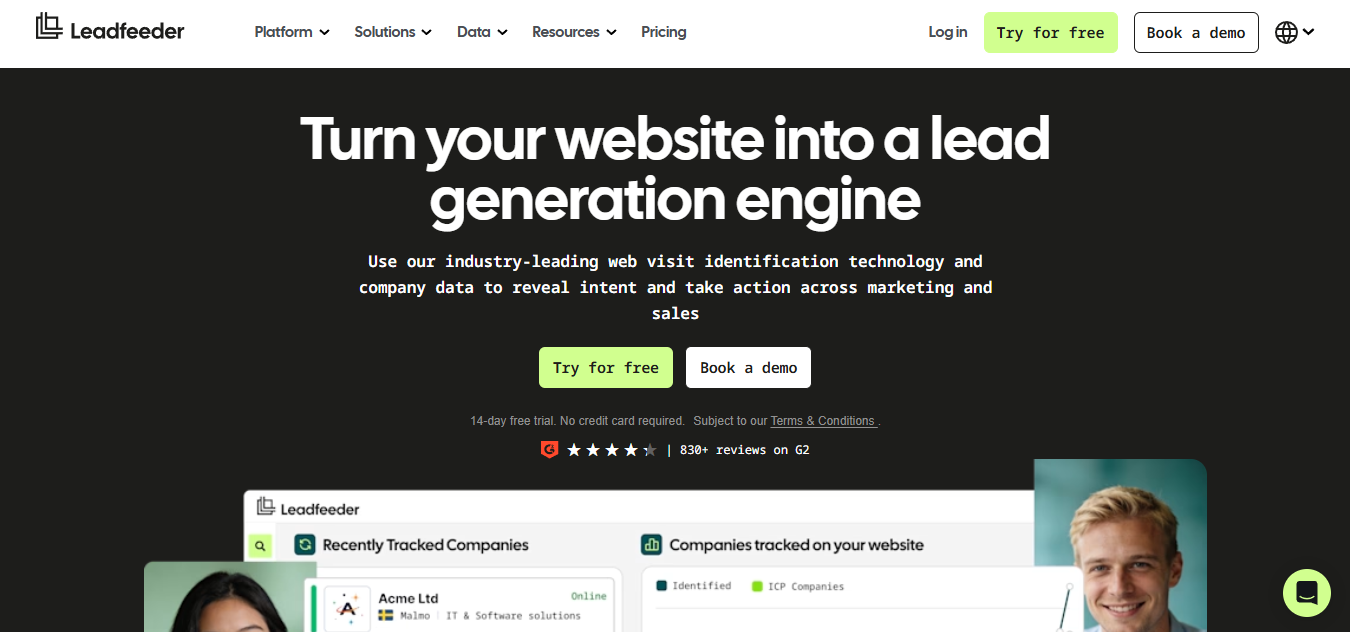
Leadfeeder surfaces companies visiting your site — even when no form is filled out.
Leadfeeder (now part of Dealfront) comes at ai lead generation from the opposite direction of most outbound databases: it identifies the companies already visiting your site, even if nobody fills out a form. By matching IP data and behavior patterns to company records, it surfaces accounts actively researching your category. That is a buying signal many outbound-only stacks miss. Leadfeeder integrates with major CRMs and can alert your team when target accounts hit key pages. The catch is that it identifies companies, not people, so you will still need a contact enrichment tool (like Bitscale, Lusha, or Apollo) to find the right stakeholders. Ideal for: Inbound-heavy teams that want to turn anonymous website traffic into qualified pipeline.
11. Outreach
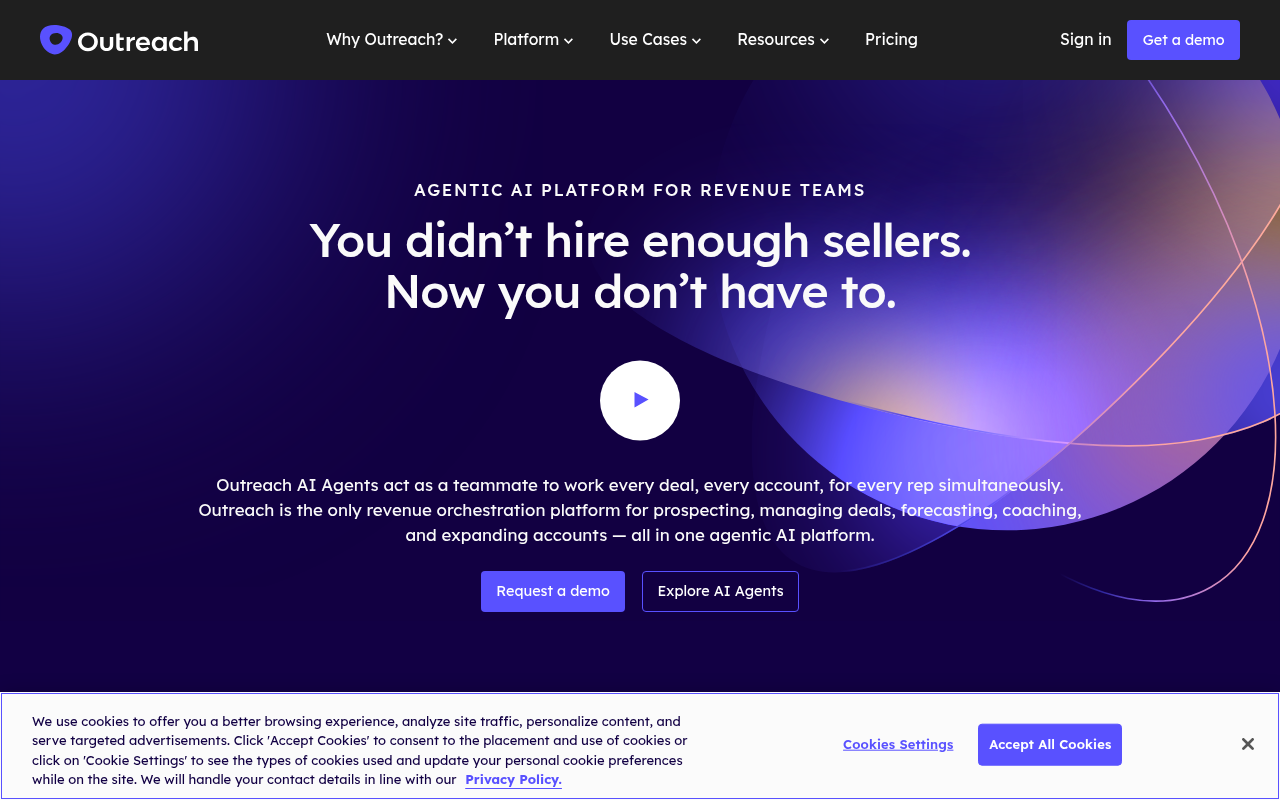
Outreach handles the execution layer — sequences, AI email optimization, and deal management.
Outreach is not a prospecting database, but it belongs in the conversation because lead generation does not stop once you have a name and an email. Outreach runs the execution layer: multi-channel sequences (email, phone, LinkedIn), AI-assisted email optimization, deal inspection, and forecasting. Its AI features around sentiment analysis and recommended actions have become more credible as the product has matured. Outreach pricing is custom-quoted and typically aimed at mid-market and enterprise. Most teams pair Outreach with upstream data providers (Bitscale, Cognism, Apollo) to connect discovery to engagement without breaking the handoff. Ideal for: Sales teams that need sophisticated sequence execution and deal management downstream of prospecting.
12. 6sense
6sense's Revenue AI scores accounts by buying stage to surface in-market prospects.
6sense is built for account-level prioritization, using AI to predict which accounts are in active buying cycles based on intent signals, anonymous web research, and engagement patterns. Its Revenue AI model scores accounts by buying stage so marketing and sales can focus on the ones showing the strongest purchase intent. 6sense also includes contact data and advertising capabilities, pushing it into full ABM platform territory. That breadth comes with real implementation weight, and the cost is enterprise-grade with custom contracts. Teams early in their GTM maturity often struggle to operationalize all that capability. Ideal for: Enterprise ABM teams that want predictive account intelligence and can invest in implementation.
Which Platform Fits Your Team?
| Team Type | Top Pick | Runner-Up | Why |
|---|---|---|---|
| Growth-stage SDR team (5-20 reps) | Bitscale | Clay | Unified GTM with pre-built workflows that scale without dedicated ops |
| Inbound-led with sales assist | Bitscale | Leadfeeder | CRM enrichment and workflow automation for inbound follow-up |
| Solo founder / early startup | Apollo.io | UpLead | Free tiers, quick setup, all-in-one coverage |
| Agency running outbound for clients | Clay | Instantly.ai | High customization plus multi-client flexibility |
| Enterprise sales org (50+ reps) | ZoomInfo | 6sense | Broad data coverage, compliance, and forecasting support |
| Phone-heavy outbound team | Cognism | Lusha | Phone-verified mobiles and strong GDPR posture |
| High-volume cold email | Instantly.ai | Apollo.io | Deliverability tooling and inbox rotation built in |
| ABM / demand gen | 6sense | Cognism | Predictive intent with account-level buying signals |
| Recommendations based on team size, motion type, and budget constraints. |
The right ai lead generation software comes down to your motion, your headcount, and what is already in your stack. Teams running multi-channel outbound with 5-20 reps usually get the most leverage from a platform like Bitscale that combines prospecting, enrichment, and automation in one place. Larger orgs with dedicated ops support can justify more flexible build-your-own tooling like Clay or full enterprise suites like ZoomInfo. If you want a wider menu of options, this roundup of the best B2B lead generation tools is a useful cross-check.
Whatever you buy, the workflow after "find a lead" is where most teams either compound results or leak pipeline. Lead volume does not matter much without solid CRM lead management: scoring, routing, and enrichment that keep records usable and follow-up consistent. Organizations that integrate AI into lead generation workflows often improve operational efficiency by reducing manual prospecting, improving CRM data quality, and helping revenue teams prioritize higher-value opportunities. The teams pulling ahead are not just adopting AI lead generation tools; they are wiring data, signals, and execution together so the system runs without manual gaps.
Frequently Asked Questions
What is AI lead generation, and what changes versus traditional prospecting?
AI lead generation uses machine learning and real-time data to find, enrich, and prioritize prospects with far less manual work. Traditional prospecting leans on static databases and rep-driven research. AI-powered platforms continuously monitor buying signals, verify contact data on an ongoing basis, and can trigger outbound workflows when account activity changes.
Which AI lead generation tool makes the most sense for small B2B teams?
Apollo.io and UpLead are common starting points for small teams because the tiers are affordable (and Apollo has a usable free plan) and the workflows are easy to stand up. Once you need automation, ongoing CRM enrichment, and signal-based prospecting, platforms like Bitscale tend to scale better without forcing you to hire dedicated ops just to keep the stack running.
How do AI prospecting tools handle accuracy and compliance?
Most vendors mix data partnerships, user-contributed sources, web scraping, and real-time verification to improve accuracy. Cognism is notable for GDPR compliance and phone-verified contacts. Clay's waterfall enrichment approach helps by checking multiple providers and returning the first verified result. Before signing, validate how the vendor sources data and what compliance certifications and controls they maintain.
Can AI lead generation software replace an SDR team?
Not fully. AI lead generation software can automate the research, enrichment, and initial outreach steps that eat up most of an SDR's day, which lets smaller teams produce output closer to much larger ones. Human judgment still matters for complex deals, relationship building, and handling nuanced objections. AI is a force multiplier, not a headcount replacement.
What integrations matter most in lead generation software?
Start with native CRM integrations (Salesforce, HubSpot), then make sure it connects cleanly to your execution layer (Outreach, Instantly, Salesloft) and supports enrichment via API. Platforms like Bitscale and Clay stand out for broader integration ecosystems that move prospecting data into the tools your team actually uses, reducing manual transfers and keeping CRM records current.

Sanket
CEO | Co-Founder Bitscale


Sanket is the CEO and Co-Founder of Bitscale. He leads company vision and strategy, building the future of AI-driven sales intelligence for modern B2B teams. Sanket is obsessed with the intersection of AI and go-to-market, and has spent years studying how the best B2B companies find, engage, and convert customers at scale. He writes about company building, product strategy, and where AI is taking the sales industry.
Read other blogs
All Blogs
12 Best CRM Sync Tools for Revenue Teams in 2026
Compare 12 CRM sync tools for Salesforce and HubSpot, including enrichment, reverse ETL, and automation options for cleaner revenue data.
Sales Data Enrichment: A Buyer's Guide for Modern B2B Teams
Sales data enrichment helps B2B teams improve CRM records, routing, prospecting, and account prioritization. Compare workflows, costs, and vendor fit today.
What Is AI Prospect Qualification? A Practical Guide for Modern Revenue Teams
AI prospect qualification helps revenue teams enrich data, assess ICP fit, prioritize buying signals, and route the right accounts into CRM workflows.