AI Sales Rep Compensation Benchmarks: A Practical Guide for Revenue Leaders
Table of Contents
Explore Bitscale
Find decision makers, more insights and contact information about this company on Bitscale
AI sales compensation has moved from "interesting idea" to operational reality. Across the B2B landscape, AI is rapidly becoming the default starting point for seller research and prospecting, replacing manual workflows that once consumed the bulk of a rep's day. When prospecting, qualification, and chunks of outreach get pushed into intelligent systems, the old habit of paying per dial, per email, or per meeting booked starts to fail. Keep an activity-heavy plan in place and you end up paying for motion, while the people actually producing revenue feel like the model is working against them.
This is written for CROs, VP Sales, and RevOps leaders who have to rebuild compensation for teams selling alongside AI. The focus is practical: quota design, commission mechanics, pipeline quality measurement, and governance, plus comparison tables you can adapt to your own org. This is not salary benchmarking. It is incentive alignment, making sure variable pay buys the outcomes the business needs, not the artifacts of an outdated workflow.
Sections covered:
- How AI changes the work SDRs, AEs, and RevOps teams perform
- Traditional vs. AI-assisted compensation models (comparison table)
- Quota design and commission plans for AI-augmented teams
- Pipeline quality, CRM hygiene, and the metrics that matter
- Incentivizing AI adoption without punishing holdouts
- Governance, RevOps alignment, and continuous optimization
- FAQ for revenue leaders evaluating AI sales incentives
How AI Rewrites the Sales Job Description
Before you touch a comp plan, get clear on what AI is actually changing in the work. A traditional SDR burned hours on manual account research, writing first-touch emails, and logging everything into the CRM. A modern SDR, equipped with AI sales assistants, spends that time reviewing AI-surfaced buying signals, tightening outreach that an agent already drafted, and triaging a pipeline that has been pre-qualified before it ever hits their queue.
This is not "the same job, faster." It is a different job. AEs who once lost huge blocks of the week to internal grind (updating Salesforce, building decks, chasing procurement) can offload a lot of that through AI workflows. What stays on the human side is the high-judgment work: managing buying committees, negotiating commercial terms, and running multi-threaded deals without dropping the ball. Industry data consistently shows that sellers who regularly incorporate AI sales technology into their workflows outperform peers who rely on manual processes alone, often by a significant margin.
When the job changes and the comp plan stays frozen, trust erodes fast. The reps leaning into AI and closing larger deals across fewer accounts should not get dinged because their activity counts fell. That tension sits at the center of AI sales rep compensation, and everything that follows is about resolving it without breaking your culture or your forecast.
Traditional vs. AI-Assisted Compensation: A Side-by-Side View
The table below lays out how legacy compensation models differ from plans built for AI-augmented teams. Treat it like a diagnostic. If your current plan reads like the left column, you have a clear migration path toward the right.
| Dimension | Traditional Compensation | AI-Assisted Compensation |
|---|---|---|
| Primary metrics | Calls made, emails sent, meetings booked | Pipeline quality score, win rate, revenue per rep |
| Quota basis | Historical averages, top-down targets | AI-informed territory potential, predictive attainment modeling |
| Commission triggers | Activity milestones, booked meetings | Qualified pipeline created, closed-won revenue, expansion revenue |
| CRM expectations | Manual logging, periodic audits | Automated enrichment with human verification; hygiene as a comp modifier |
| AI adoption | Not measured | Tracked and incentivized as a performance multiplier |
| Plan review cadence | Annual | Regular reviews (e.g., quarterly) with continuous data feedback |
| SDR-to-AE handoff | Meeting-set credit | Qualified opportunity credit based on pipeline progression |
| Governance | Finance-driven, static | RevOps-driven, dynamic, data-validated |
| Revenue leaders should treat this table as a maturity assessment, not a binary switch. |
Analysts at firms like Forrester have argued that traditional sales compensation measures are increasingly outdated for complex B2B sales, pointing toward a shift that rewards performance on key touchpoints throughout the sales process rather than only the final closed deal (Forrester). That shift is already visible in organizations that have moved to AI-assisted selling, because the touchpoints now show up as measurable, attributable workflow.
Redesigning Quotas and Commission Plans for AI-Augmented Teams
Quota planning in an AI-assisted environment needs a different starting line. Instead of taking last year, adding a growth factor, and calling it a plan, strong RevOps teams lean on predictive models that incorporate territory density, account propensity scores, and the expected productivity lift from AI tooling. The quota should represent what a properly equipped rep can produce, not what someone fighting manual workflows managed to scrape together historically.
Structuring Commission Plans Around Outcomes
For AI-augmented teams, commission plans work best when outcomes carry the weight and activities sit in the background. As an illustrative example, a practical AE structure might put roughly 60% of variable pay on closed-won revenue, 20% on pipeline quality (stage-progression velocity and win rate on self-sourced deals), and 20% on strategic behaviors like multi-threading, expansion inside existing accounts, and CRM data accuracy. The exact split will vary by organization, sales motion, and deal complexity. For AI SDR compensation, the change is sharper: swap "meetings booked" for "qualified opportunities accepted by AEs," then add a modifier tied to whether that pipeline converts within an agreed evaluation period.
That is not an argument for ignoring activity entirely. It is a reminder to stop using activity as the thing that unlocks commission. Minimum activity belongs in expectations and coaching, not as the engine of your payout model.
The Metrics That Actually Matter (and Why)
Metric selection is where most comp redesigns either hold together or fall apart. AI makes it tempting to instrument everything. Do not. Once a plan carries more than five or six metrics, reps stop optimizing and start guessing. The table below highlights the metrics worth tying to compensation, why they matter when AI is in the workflow, and which roles they should apply to.
| Metric | Why It Matters with AI | SDR | AE | RevOps |
|---|---|---|---|---|
| Qualified Pipeline Created ($) | AI pre-qualifies leads; this metric rewards reps who turn signals into real opportunities | Primary | Secondary | Monitors |
| Win Rate (%) | AI surfaces better-fit accounts; win rate shows whether reps are pursuing the right deals | N/A | Primary | Monitors |
| Average Deal Size | AI enables reps to pursue larger, more complex deals; comp should reinforce that motion | N/A | Primary | Monitors |
| Sales Cycle Length | AI shortens cycles; tracking this reduces sandbagging risk | N/A | Modifier | Monitors |
| CRM Data Accuracy | AI depends on clean data; paying for hygiene creates a reinforcing loop | Modifier | Modifier | Primary |
| AI Tool Adoption Score | Captures consistent AI usage; early adopters outperform | Modifier | Modifier | Tracks |
| Pipeline-to-Close Conversion | Separates pipeline quality from pipeline volume; reduces vanity metrics | Secondary | Primary | Monitors |
| Modifiers adjust payout up or down by a small percentage; primary metrics drive the bulk of variable compensation. |
CRM data accuracy shows up as a modifier for both SDRs and AEs on purpose. Tools like Bitscale automate enrichment and sync, but the human layer still matters: verification, judgment, and fixing the edge cases that automation misses. When reps know comp is partially tied to data quality, CRM stops being a chore they postpone until Friday. Cleaner data improves the AI signals, better signals improve pipeline quality, and pipeline quality improves outcomes. That loop is what you are paying to protect.
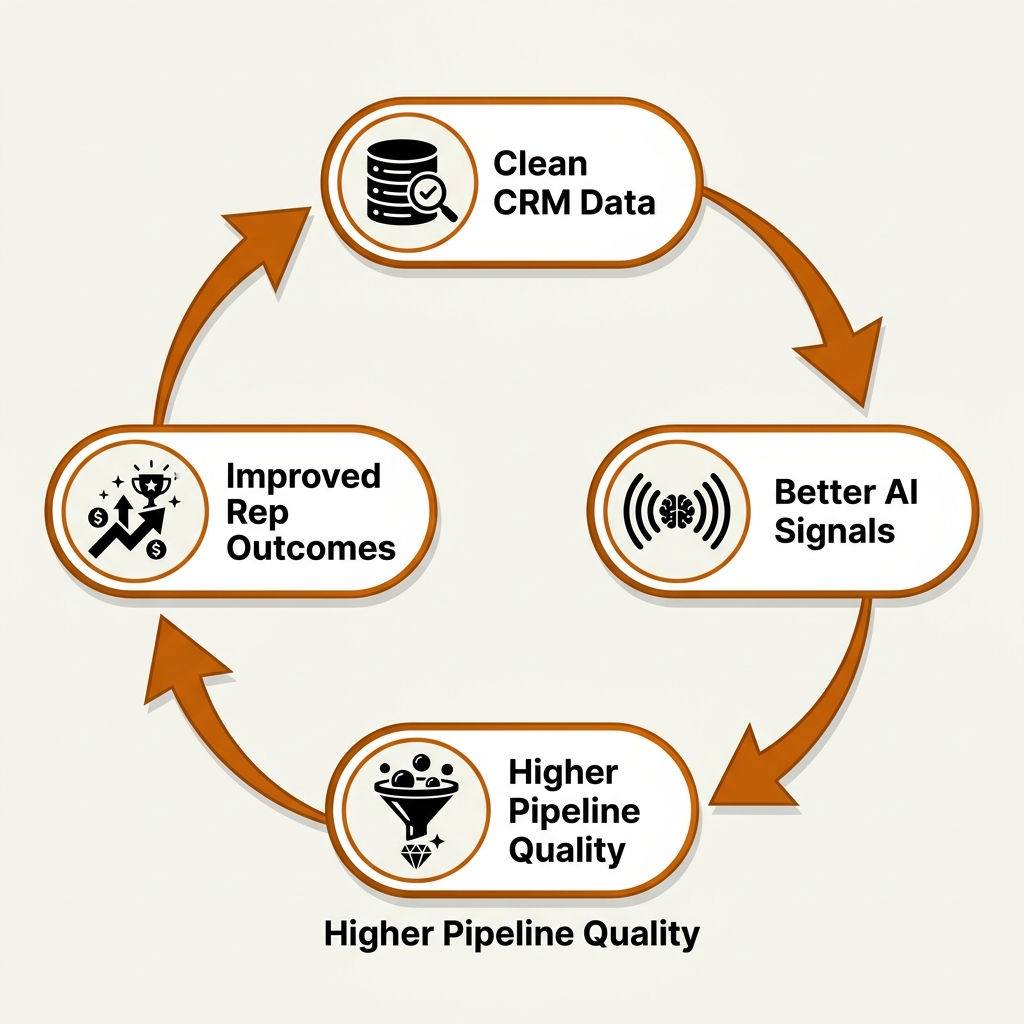
Clean CRM data creates a self-reinforcing loop that powers AI signal quality and rep outcomes.
Incentivizing AI Adoption Without Creating a Two-Tier Team
Industry surveys consistently show that a majority of sales organizations have not yet integrated AI into their compensation processes. That gap is both opportunity and trap. Tie comp directly to tool usage and you will pay for compliance instead of performance. Ignore adoption and your strongest reps, who are already using AI, effectively subsidize the productivity drag of the holdouts.
The cleanest pattern is to treat adoption like a multiplier, not a standalone scoreboard. A rep who lands at 110% of quota without AI still earns their full accelerator. A rep who lands at 110% and maintains a high adoption score earns an additional kicker (many organizations set this in the range of 5-10%, though the right number depends on your economics). That rewards the behavior without turning ramping reps into collateral damage. Broader compensation research supports the underlying economics: professionals with demonstrated AI proficiency tend to command a meaningful salary premium because of the efficiency they deliver. Putting some of that premium into variable pay, instead of only base, keeps the incentive tied to ongoing output.
A common mistake is treating AI adoption as a yes/no label. Using AI for prospect research but skipping AI-generated call prep is not "adopted" or "not adopted" in any useful sense. Build a weighted adoption score that reflects the workflows that matter to your revenue model, then measure usage across those steps. Bitscale's workflow automation and intent signal tracking support that kind of granular measurement without asking reps to self-report their own behavior.
Compensation Focus by Sales Role
AI does not flatten roles; it makes the differences sharper. SDRs, AEs, managers, and RevOps each control different levers, and comp should follow control. The table below breaks down where to put the weight by role.
| Role | Primary Comp Focus | Secondary Comp Focus | AI-Specific Modifier |
|---|---|---|---|
| SDR | Qualified opportunities accepted by AEs | Pipeline conversion rate within an agreed evaluation period | AI workflow adoption score |
| AE | Closed-won revenue, deal size | Win rate, multi-thread depth | AI tool usage across deal stages |
| Sales Manager | Team quota attainment, rep ramp time | Pipeline health, forecast accuracy | Team-level AI adoption rate |
| RevOps | Data accuracy, plan effectiveness | Process cycle time, system uptime | AI model performance and data quality |
| Each role's comp plan should reflect the outcomes that role uniquely controls. |
For SDRs, moving from "meetings booked" to "qualified opportunities" is the highest-leverage change you can make. It removes the incentive to flood calendars with low-quality meetings that burn AE time. For AEs, paying for deal quality (measured by margin, contract length, or expansion potential) reduces the urge to discount just to get a signature. Managers belong on team outcomes and the pace at which new reps reach full sales productivity, which AI tools can accelerate when adoption is real.
Governance, RevOps Alignment, and Continuous Optimization
A comp plan only works if the governance behind it works. In many traditional orgs, Finance "owns" comp design, Sales "owns" execution, and the feedback loop belongs to nobody. In an AI-assisted revenue org, RevOps has to sit in the middle, connecting data, systems, and incentive design so the plan can be managed, not merely administered.
A growing number of compensation leaders are incorporating AI into their sales compensation processes, from scenario modeling to payout optimization. The teams getting real results tend to share one trait: RevOps has the authority to adjust mechanics on a regular cadence (quarterly is a common choice) based on data, not just annually based on budget cycles. To do that without chaos, you need three capabilities: real-time visibility into plan effectiveness, automated payout calculations that cut down on disputes, and a clear escalation path when the data shows the plan is driving unintended behavior.
Continuous optimization does not mean rewriting the plan every month. Reps need stability if you want belief, not suspicion. A workable cadence is regular reviews (many organizations use quarterly cycles) where you can tune modifiers and kickers, paired with less frequent reviews for structural changes like base/variable splits and quota methodology. Platforms that unify CRM data, enrichment, and workflow tracking (like Bitscale's sales intelligence capabilities) give RevOps the real-time layer required to make those calls with confidence. When pipeline data, contact enrichment, and buying signals live in one system, you can trace behavior to outcomes without stitching together five tools and arguing about whose dashboard is "right."
The rise of agentic sales workflows, where AI agents run multi-step processes autonomously, adds a new attribution problem. If an AI agent books a meeting or qualifies a lead, who gets paid? Write the attribution rules before you deploy agentic workflows, not after the first commission dispute. A sensible default is straightforward: the human rep who owns the account relationship gets primary credit, while the AI agent's contribution shows up in the adoption-score modifier.
Putting It All Together: A Phased Implementation Model
Redesigning sales compensation benchmarks for an AI-assisted organization is a multi-phase effort. Treat it like a managed rollout, not a one-off project, and sequence the work so you move quickly without breaking trust. The pace of each phase will depend on your organization's size, complexity, and readiness for change.
- Phase 1: Assessment. Map current comp plan mechanics against the traditional vs. AI-assisted table above. Call out which measures are still activity-based versus outcome-based. Capture baseline AI tool adoption across the team and identify the gaps between current incentives and desired outcomes.
- Phase 2: Pilot. Roll out an AI adoption score and CRM hygiene as comp modifiers for a subset of reps. Leave primary commission triggers alone for now. Track impact on pipeline quality and rep sentiment to build an evidence base for broader changes.
- Phase 3: Expansion. Move SDR compensation from meetings booked to qualified opportunities. Rebalance AE plans so win rate and deal quality sit alongside closed revenue. Use your sales funnel optimization guide as a framework for defining stage-progression criteria. Extend the new model to all teams once pilot data supports the shift.
- Phase 4: Optimization. Stand up a regular comp review cadence with RevOps, Finance, and Sales Leadership. Build automated dashboards that show plan effectiveness in real time. Document attribution rules for AI-assisted and agentic workflows. Refine modifiers and mechanics based on ongoing performance data.
Avoid the urge to rebuild everything in one swing. Reps need time to see that the new model is fair, and RevOps needs enough data to prove the changes are doing what you intended before you scale them across the org.
Key Takeaways for Revenue Leaders
AI sales compensation is not a cost-cutting exercise where you pay people less because software did some of the work. It is a redesign: paying for judgment, deal orchestration, and the outcomes that matter when AI is handling more of the mechanics. Teams that get the incentives right will keep their best performers, recruit stronger talent, and build a revenue engine where AI and human skill compound instead of competing.
- Shift comp triggers from activity volume to pipeline quality and closed outcomes.
- Use AI adoption as a multiplier, not a gate, to encourage behavior change without punishing ramp time.
- Tie CRM hygiene to compensation so reps invest in the data that powers AI models.
- Give RevOps authority to review and adjust comp modifiers on a regular cadence based on real performance data.
- Establish clear attribution rules for AI-assisted and agentic workflows before deployment.
- Invest in a unified GTM platform like Bitscale that connects enrichment, signals, and CRM data so you can measure what matters.
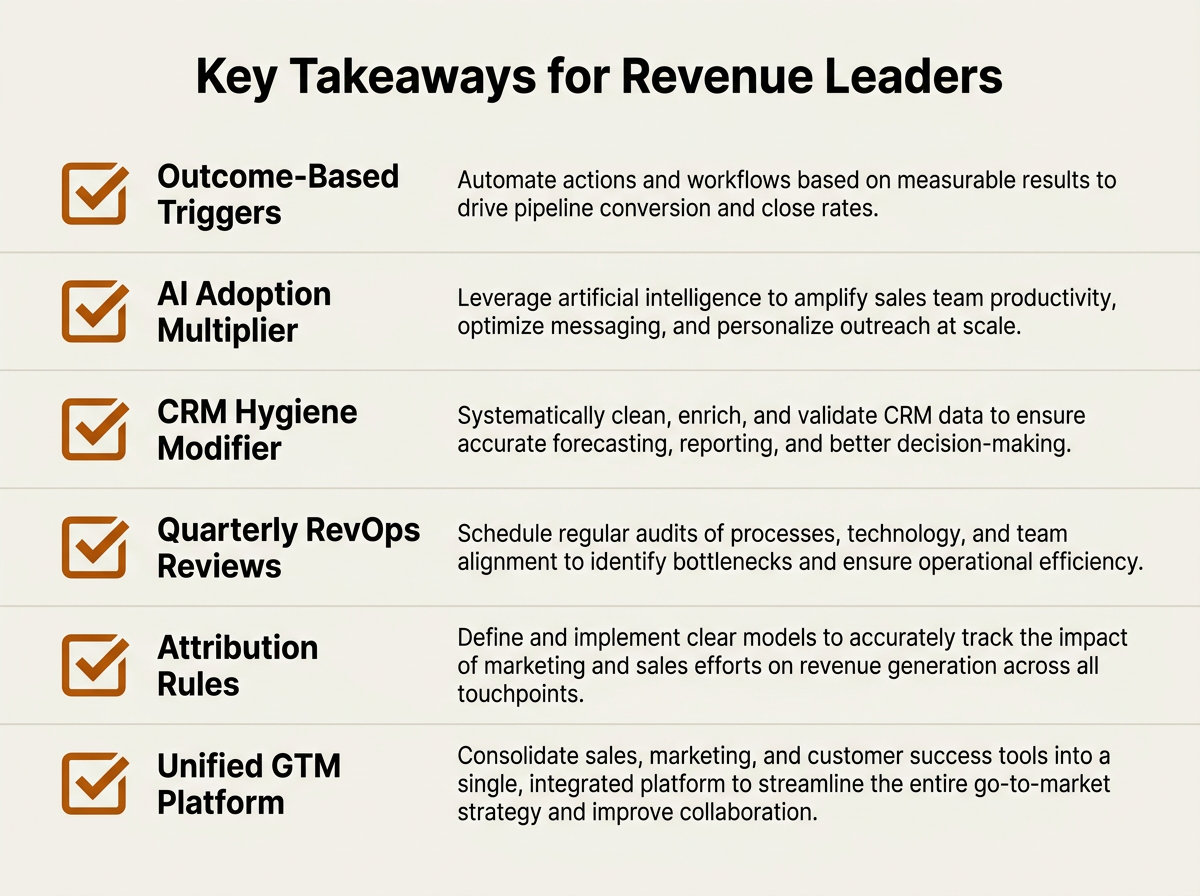
A quick-reference checklist for revenue leaders redesigning compensation for AI-assisted sales teams.
Frequently Asked Questions
How should AI SDR compensation differ from traditional SDR comp plans?
Traditional SDR plans tend to pay for meetings booked or raw activity like calls made. AI SDR compensation should pay for qualified opportunities that actually move through the pipeline, typically measured by AE acceptance and conversion within an agreed evaluation period. Activity becomes a baseline expectation managed through coaching, not the primary trigger for commission.
Should we lower quotas when reps start using AI tools?
Not right away. During the initial adoption period, hold quotas steady and watch how productivity changes as usage becomes consistent. Once you have enough data on AI-assisted performance, recalibrate quotas based on the new baseline. Raising or reshaping quotas too early, before reps have really adopted the tools, breeds resentment and slows adoption.
How do we handle commission attribution when an AI agent qualifies a lead?
Give primary credit to the human rep who owns the account relationship. Reflect the AI agent's contribution through an adoption-score modifier that rewards consistent use of AI workflows. Put these rules in writing before deploying agentic sales workflows so you do not end up negotiating attribution mid-dispute.
What role does revenue operations play in AI sales compensation design?
RevOps should own the data foundation and the feedback loop behind comp decisions: tracking whether the plan is working, automating payout calculations, and surfacing which metrics are driving the behaviors you want. Finance sets budget guardrails and leadership sets direction, but RevOps provides the analytical basis for regular adjustments.
Can we use AI to design and optimize the comp plans themselves?
Yes. A growing number of compensation leaders are using AI in their sales compensation processes. AI is well-suited for modeling quota scenarios, forecasting attainment distributions, and spotting mechanics that create unintended incentives. The judgment call still belongs to humans: setting strategic priorities and making sure the plan fits your culture.

Sanket
CEO | Co-Founder Bitscale


Sanket is the CEO and Co-Founder of Bitscale. He leads company vision and strategy, building the future of AI-driven sales intelligence for modern B2B teams. Sanket is obsessed with the intersection of AI and go-to-market, and has spent years studying how the best B2B companies find, engage, and convert customers at scale. He writes about company building, product strategy, and where AI is taking the sales industry.
Read other blogs
All Blogs
12 Best CRM Sync Tools for Revenue Teams in 2026
Compare 12 CRM sync tools for Salesforce and HubSpot, including enrichment, reverse ETL, and automation options for cleaner revenue data.
Sales Data Enrichment: A Buyer's Guide for Modern B2B Teams
Sales data enrichment helps B2B teams improve CRM records, routing, prospecting, and account prioritization. Compare workflows, costs, and vendor fit today.
What Is AI Prospect Qualification? A Practical Guide for Modern Revenue Teams
AI prospect qualification helps revenue teams enrich data, assess ICP fit, prioritize buying signals, and route the right accounts into CRM workflows.