12 Best CRM Sync Tools for Revenue Teams in 2026
Table of Contents
Explore Bitscale
Find decision makers, more insights and contact information about this company on Bitscale
Revenue operations on Salesforce or HubSpot usually runs into the same problems: enrichment trapped in spreadsheets, contact data aging faster than reps can fix it, and one-way integrations that leave the CRM only partly informed. CRM sync tools keep records consistent, enriched, and usable across the GTM stack. For teams dealing with inaccurate or incomplete records, this starts with strong CRM data enrichment. Choosing one is harder than it sounds. The category now includes reverse ETL, enrichment platforms, and automation products with very different operating models. Understanding RevOps automation helps clarify how these tools fit into the broader revenue stack.
The 12 products below handle CRM data sync, enrichment, and revenue automation in distinct ways. Each entry covers how its sync works, supported CRMs, whether data moves both directions, and its main constraints. They are grouped by primary job, which makes it easier to match a tool to your architecture and operating capacity.
The 12 CRM sync tools covered:
-
- Bitscale
-
- Clay
-
- Apollo.io
-
- Hightouch
-
- Census
-
- Syncari
-
- Unito
-
- Lusha
-
- Cognism
-
- Rattle
-
- Salesloft
-
- Instantly.ai
CRM Sync Tools Comparison Table
| Tool | Primary Function | CRM Support | Sync Direction | Enrichment Built In | Best For |
|---|---|---|---|---|---|
| Bitscale | GTM data layer and CRM enrichment | Salesforce, HubSpot | Enriched data syncs to CRM | Yes (waterfall enrichment, AI research) | RevOps teams that need enrichment and CRM sync in one workflow |
| Clay | Enrichment orchestration | Salesforce, HubSpot | Pushes enriched data to CRM | Yes (75+ data providers) | Teams building sophisticated enrichment waterfalls |
| Apollo.io | Sales intelligence and engagement | Salesforce, HubSpot | Bidirectional | Yes (native database) | SDR teams combining prospecting with CRM sync |
| Hightouch | Reverse ETL | Salesforce, HubSpot, 30+ CRMs | Warehouse to CRM (primarily one-way) | No (activates warehouse data) | Data teams pushing warehouse models into CRM |
| Census | Reverse ETL | Salesforce, HubSpot, 20+ CRMs | Warehouse to CRM (primarily one-way) | No (activates warehouse data) | Engineering-supported RevOps teams with a warehouse |
| Syncari | Data automation platform | Salesforce, HubSpot, Marketo | Bidirectional, multi-directional | Limited (unification focus) | Ops teams maintaining consistency across systems |
| Unito | Two-way integration platform | Salesforce, HubSpot, 50+ apps | Bidirectional | No | Teams syncing CRM with project management or support tools |
| Lusha | Contact enrichment | Salesforce, HubSpot | Pushes enriched contacts to CRM | Yes (email, phone, company data) | Sales teams needing quick contact enrichment in CRM |
| Cognism | Sales intelligence | Salesforce, HubSpot | Pushes enriched data to CRM | Yes (phone-verified contacts, intent data) | European and global teams with compliance requirements |
| Rattle | CRM automation and alerts | Salesforce | Bidirectional (Salesforce-Slack) | No | Sales managers improving CRM hygiene through Slack |
| Salesloft | Sales engagement | Salesforce, MS Dynamics | Bidirectional (activity sync) | No | Enterprise teams syncing engagement data to CRM |
| Instantly.ai | Cold outreach and lead management | HubSpot (via integrations) | One-way (leads to CRM via Zapier/webhooks) | Limited (email verification) | Outbound teams sending campaign leads into CRM |
| Comparison based on publicly available product documentation as of mid-2026. Verify current capabilities on each vendor's site. |
Understanding the CRM Sync Tool Landscape
A product that touches CRM data is not necessarily a CRM sync tool in the same sense as another product. Four groups matter. CRM enrichment platforms (Bitscale, Clay, Lusha, Cognism) source external data and write enriched fields into the CRM. Reverse ETL tools (Hightouch, Census) send modeled warehouse data to operational systems such as Salesforce. CRM automation tools (Syncari, Rattle, Unito) keep records aligned across systems or trigger work from CRM changes. Sales engagement platforms (Apollo.io, Salesloft, Instantly.ai) exchange contact and activity data between their engagement layer and the CRM. Each solves a separate data problem; many RevOps tools stacks use two or three categories.
1. Bitscale
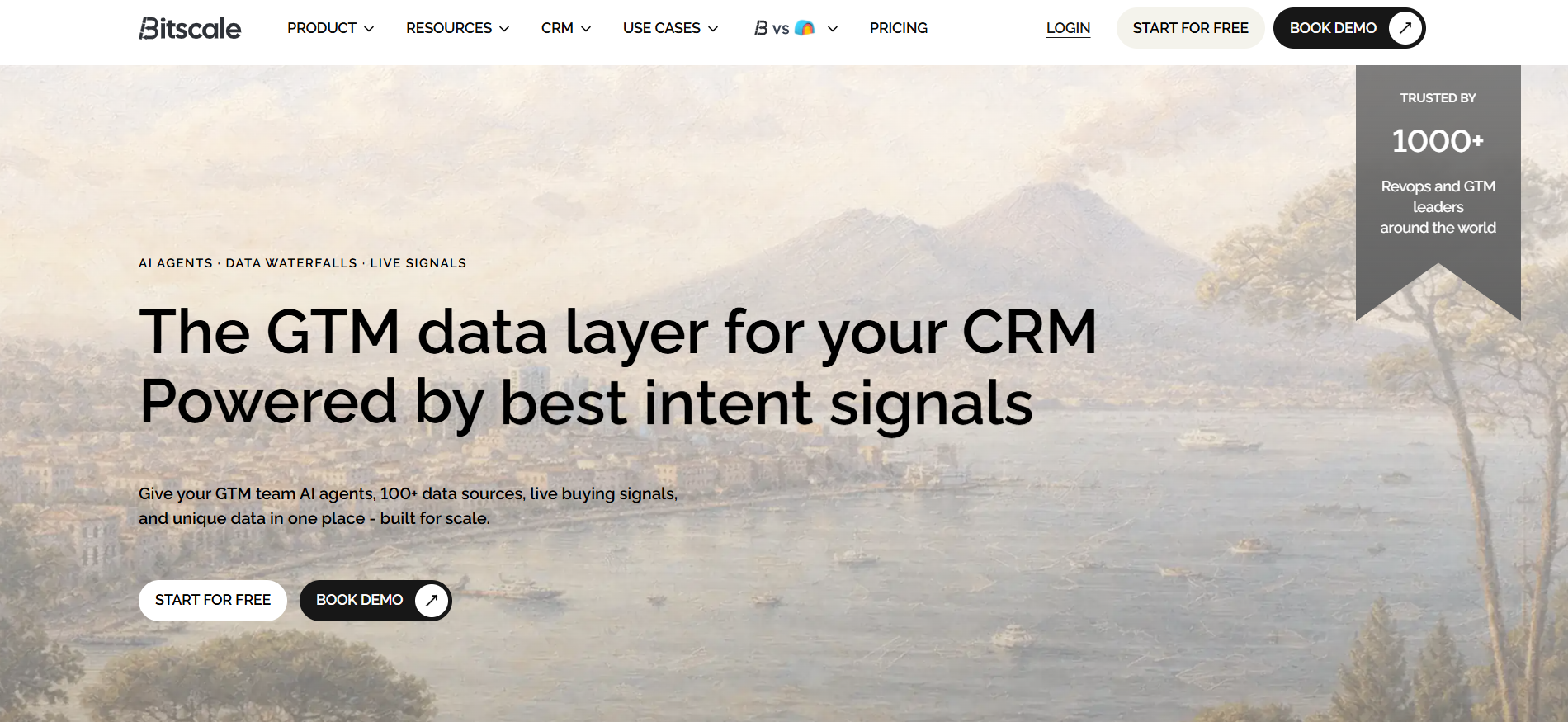
Bitscale provides a GTM data layer that enriches and syncs data into Salesforce and HubSpot.
Bitscale is positioned as a GTM data layer for revenue teams: contact and company enrichment, waterfall sourcing, AI-assisted prospect research, and CRM synchronization in one platform. Instead of building enrichment in one product and a separate handoff into Salesforce or HubSpot, teams can run both in the same workflow. Bitscale can read CRM records, enrich configured fields, and sync selected updates back into Salesforce or HubSpot.
Its waterfall enrichment approach is the practical differentiator. Rather than betting on one provider and accepting its coverage gaps, Bitscale sequences sources so a missed field can be attempted by the next source. That reduces incomplete records arriving in the CRM. The platform also supports intent data tools and buying signals, allowing records to carry account-activity context alongside static firmographics.
Best fit: RevOps and GTM operations teams on Salesforce or HubSpot that want enrichment and sync together without engineering involvement, especially when single-provider enrichment no longer covers enough records. Limitation: Workflows are configured in Bitscale while CRM records are read from and updated in Salesforce or HubSpot through the integration. Teams seeking workflows configured entirely inside their CRM should account for that operating model.
2. Clay
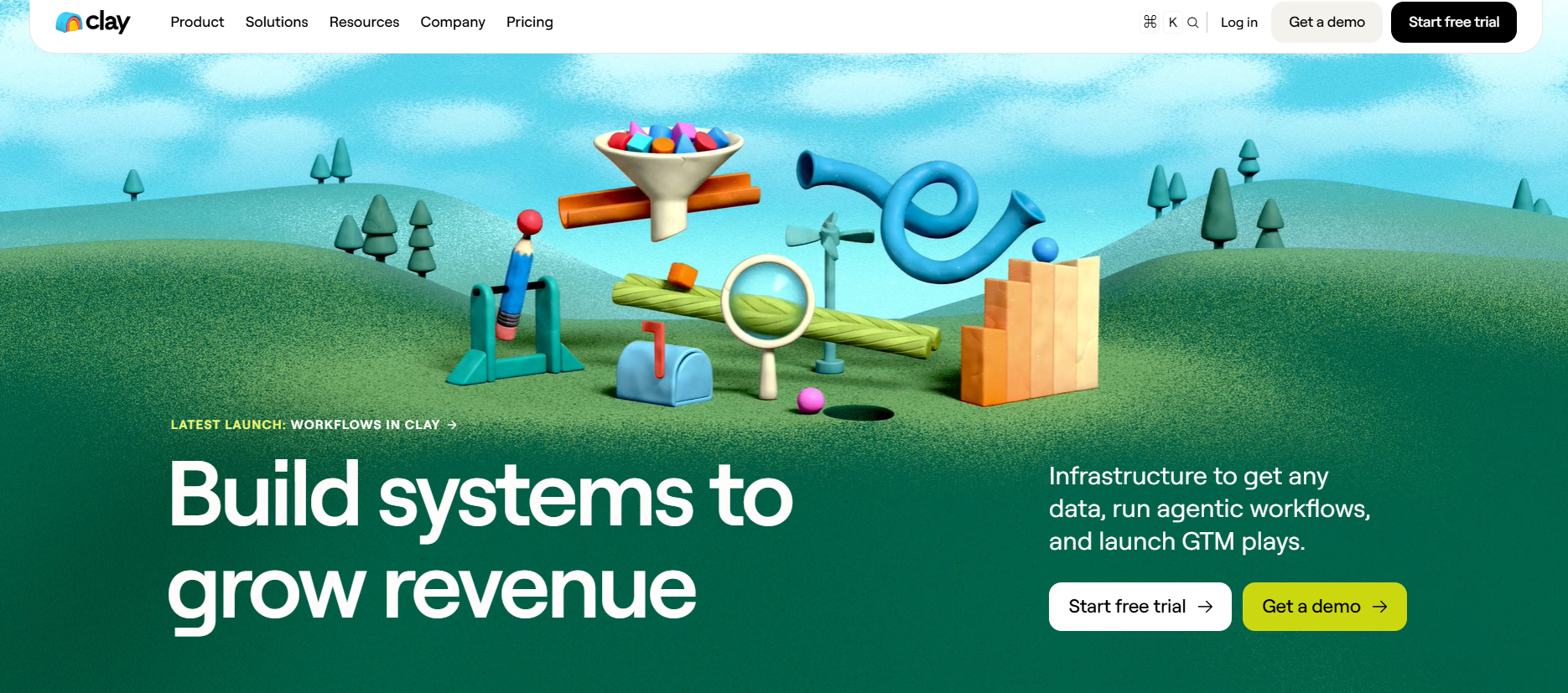
Clay's spreadsheet-like interface lets teams build complex enrichment waterfalls.
Clay orchestrates enrichment across multiple data providers and integrates with Salesforce and HubSpot. Its spreadsheet-like interface supports multi-step sequences, API chains, and conditional rules that determine which source is queried for a given record. Clay can import CRM records into its tables and create or update CRM records after enrichment.
Flexibility is Clay's strength. A technical ops owner can build highly specific workflows. That flexibility carries a learning curve, and credit-based pricing can rise quickly when several providers are queried per record. Teams looking at Bitscale as a Clay alternative often weigh simpler configuration and more predictable pricing.
3. Apollo.io
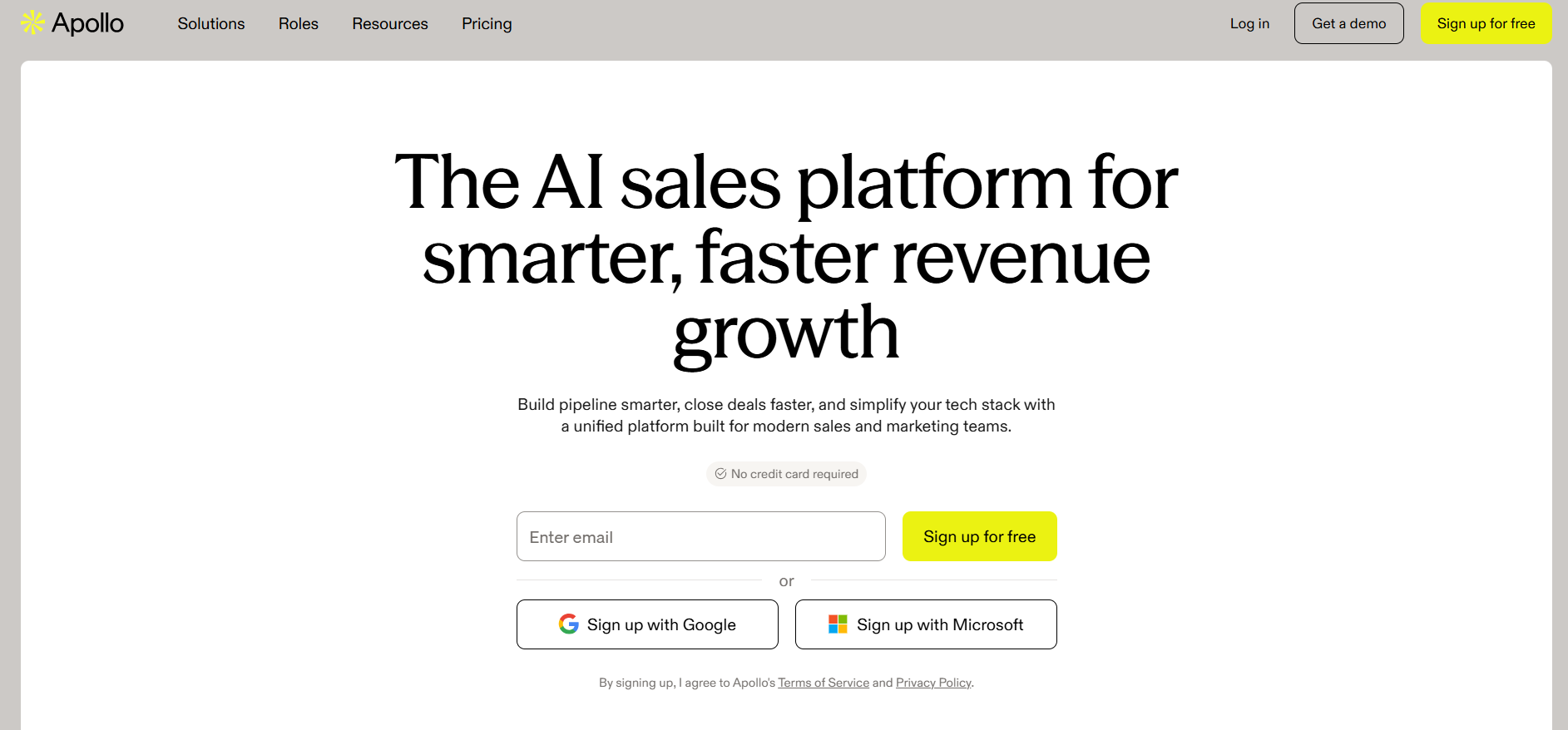
Apollo.io combines a contact database with bidirectional Salesforce and HubSpot sync.
Apollo.io combines a B2B contact database, email sequencing, and CRM integration. Its Salesforce and HubSpot integrations support bidirectional sync: contact records, activity logs, and engagement data can move both ways. For SDR teams, that puts prospecting, outreach, and CRM updates in one operating flow.
The tradeoff is dependence on Apollo's own database rather than a provider waterfall. Coverage gaps in a vertical or geography can leave records incomplete. Teams that need deeper data often pair Apollo with a dedicated enrichment product. It fits teams prioritizing all-in-one prospecting and engagement over specialized CRM data synchronization.
4. Hightouch
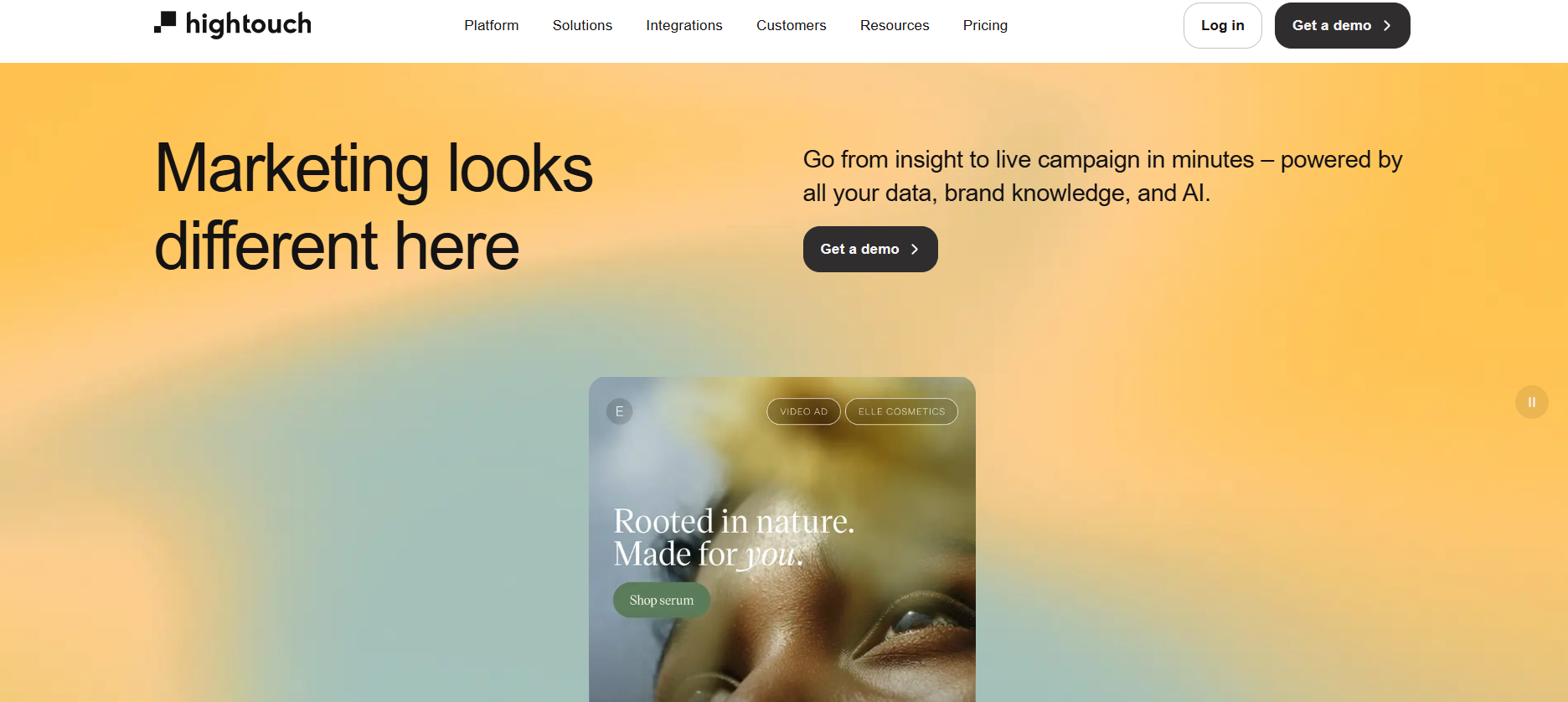
Hightouch activates warehouse data by syncing modeled datasets into CRM and marketing tools.
Hightouch is reverse ETL, not enrichment. It takes data already modeled in Snowflake, BigQuery, Redshift, or Databricks and sends it to Salesforce, HubSpot, and other destinations. Lead scores, product-usage aggregates, and health scores can reach the CRM without custom API work. Sync is primarily warehouse to CRM. This suits organizations with a modern data stack; without a warehouse and data engineering support, it is usually premature.
5. Fivetran Activations (formerly Census)
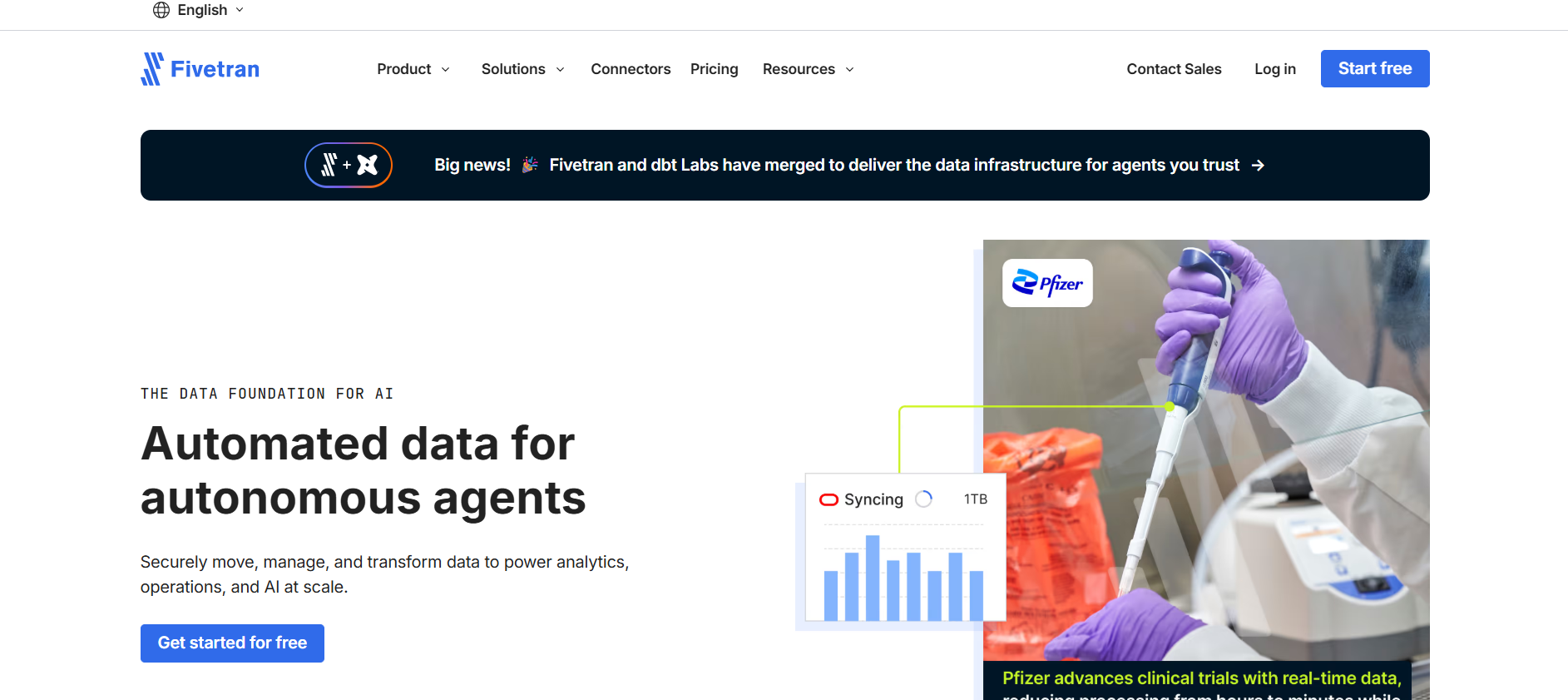
Census (now part of Fivetran) syncs warehouse-modeled data into CRM and GTM tools.
Fivetran Activations, formerly Census, sits in the same reverse ETL category as Hightouch, moving transformed warehouse data into CRM and other business applications. It supports destinations including Salesforce and HubSpot. Census requires a working warehouse and SQL-literate people to define synced models. It activates data already collected and modeled; it does not enrich it.
6. Syncari
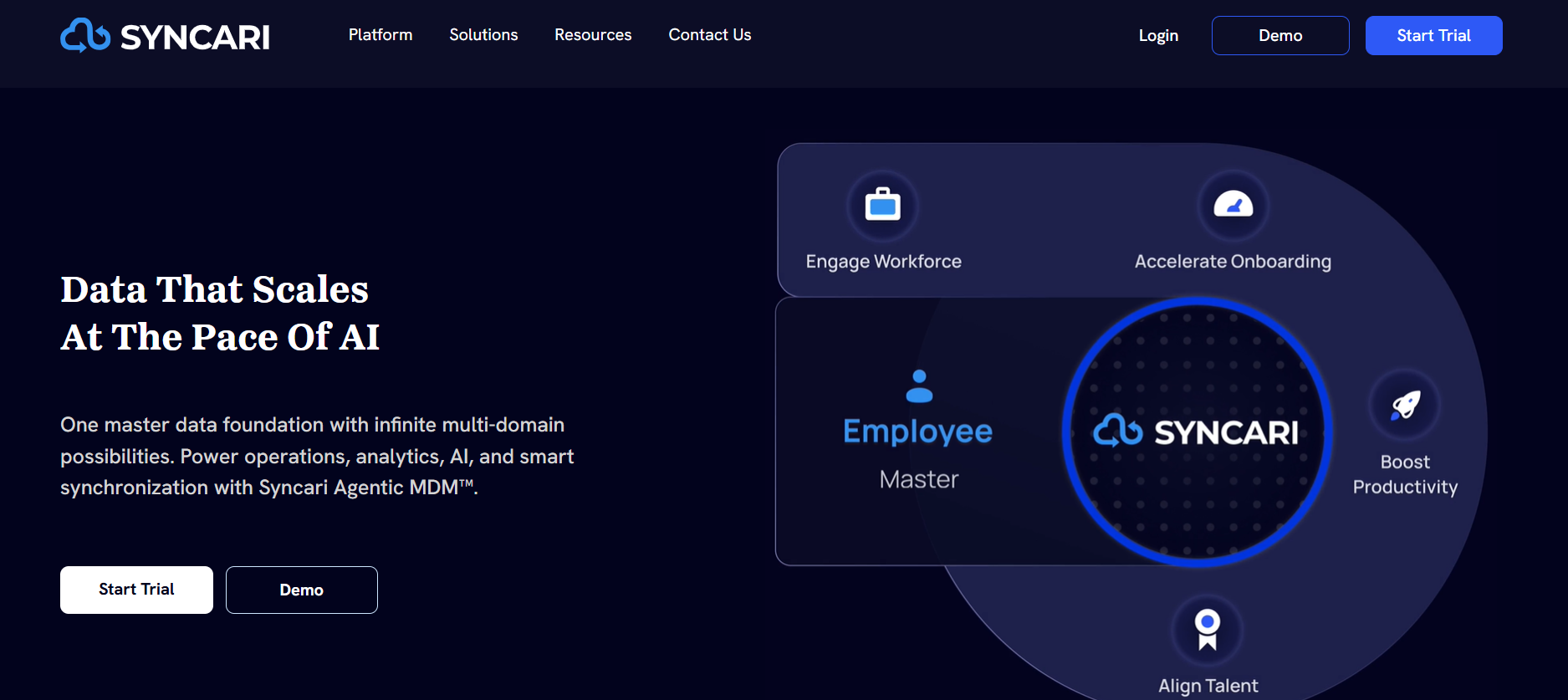
Syncari specializes in multi-directional data synchronization across CRM and marketing automation.
Syncari is built for a different job: it creates a unified data model across Salesforce, HubSpot, Marketo, and other systems, then keeps them in continuous bidirectional sync. A change in one connected system propagates according to rules you define. That makes it useful where platform drift creates reporting, routing, and handoff problems.
Key strength: Multi-directional sync with conflict-resolution rules. Key limitation: Syncari addresses consistency, not completeness; an enrichment source is still needed for missing data. Best fit: mid-market and enterprise ops teams running three or more interconnected GTM systems.
7. Unito
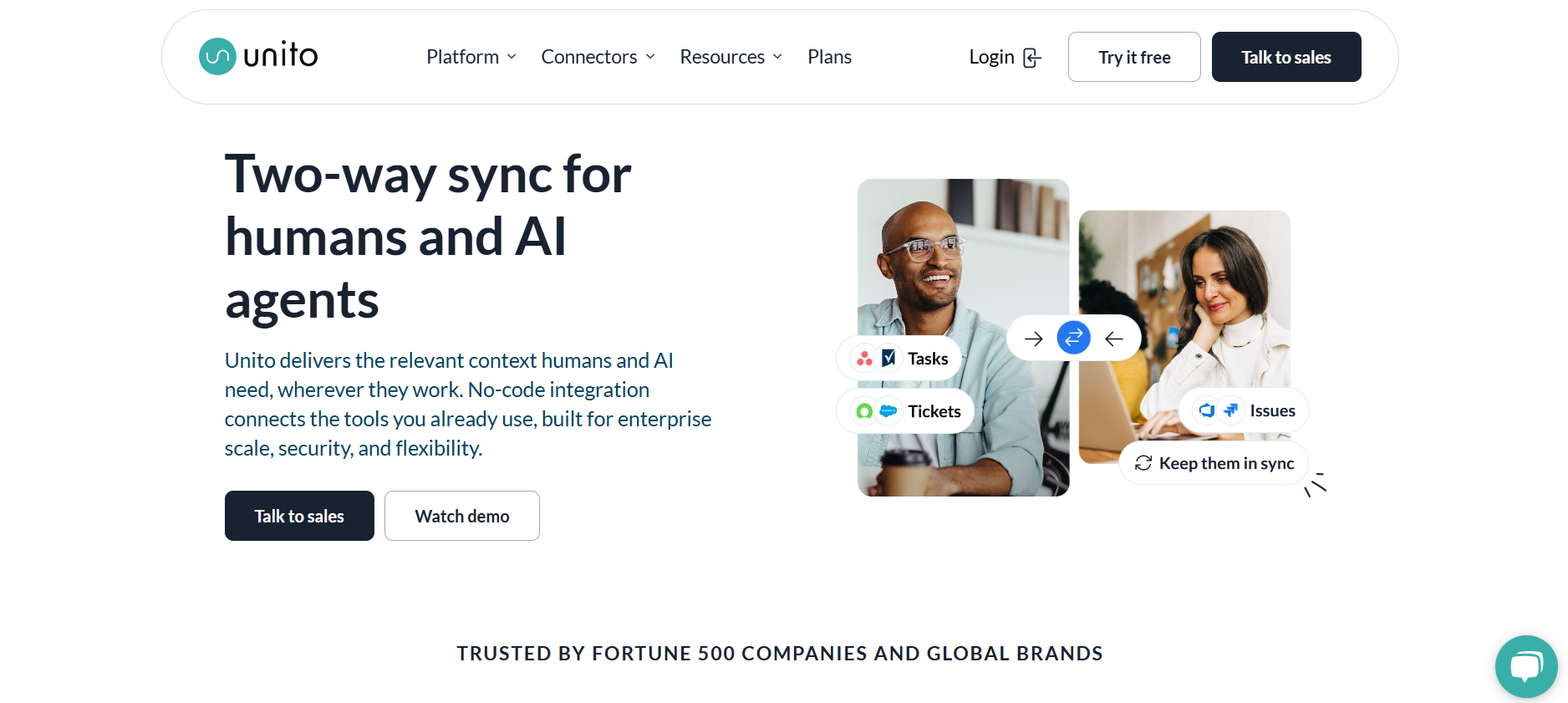
Unito enables bidirectional sync between CRM, project management, and support platforms.
Unito provides two-way sync between CRM systems and project management, support, and collaboration tools. Its focus is less CRM-to-CRM than CRM-to-everything-else sync: Salesforce to Jira, HubSpot to Asana, or a CRM to Google Sheets. It keeps account and deal information visible where customer success, product, and support work. Unito supports bidirectional field mapping and conflict rules, but provides no enrichment or data sourcing. Use it for silos between CRM and adjacent tools, not for CRM data-quality gaps.
8. Lusha
Lusha provides contact enrichment with direct CRM push to Salesforce and HubSpot.
Lusha focuses on work emails and direct-dial numbers. Enriched contacts can be sent to Salesforce or HubSpot individually from its browser extension or in bulk from the platform. That is a simple, one-way enrichment-to-CRM flow. It works for reps and small teams that need fast lookups without complex workflow design. Because Lusha is a single source, coverage depends on its database. Teams needing a multi-provider waterfall will need more than Lusha alone.
9. Cognism
Cognism offers phone-verified contact data with Salesforce and HubSpot integrations.
Cognism emphasizes data quality and compliance, especially in European markets. Its Diamond Data includes phone-verified mobile numbers, while CRM integrations push enriched contacts and intent signals into Salesforce and HubSpot. Bombora intent data adds account-level buying signals to the records. Cognism supports two-way CRM workflows with Salesforce and native bidirectional synchronization with HubSpot. It is a strong fit for EMEA selling where GDPR-compliant sourcing is mandatory; US-only teams may find its premium pricing harder to justify.
10. Rattle
Rattle automates Salesforce updates and deal alerts through Slack.
Rattle connects Salesforce and Slack bidirectionally, letting reps update fields, log activity, and manage deal stages without leaving Slack. Its purpose is reducing the friction that leads reps to skip CRM updates, rather than moving GTM data between broad sets of systems. Deal alerts, pipeline-change notifications, and Salesforce-triggered workflows are also included. Rattle is Salesforce-only. It fits organizations with persistent CRM hygiene issues and Slack as the main communication layer, not teams whose issue is incomplete data.
11. Salesloft
Salesloft syncs engagement activity bidirectionally with Salesforce and Microsoft Dynamics.
Salesloft is a sales engagement platform, but its CRM Sync feature merits inclusion. Per Salesloft's documentation, Salesforce or Microsoft Dynamics 365 data stays updated in near real time, with administrators setting which application's value "wins" for each field. Emails, calls, and cadence steps logged in Salesloft reach the right CRM record; CRM changes return to Salesloft for segmentation and routing. Enrichment is minimal. It fits enterprise Salesforce or Dynamics teams focused on engagement activity, not contact data.
12. Instantly.ai
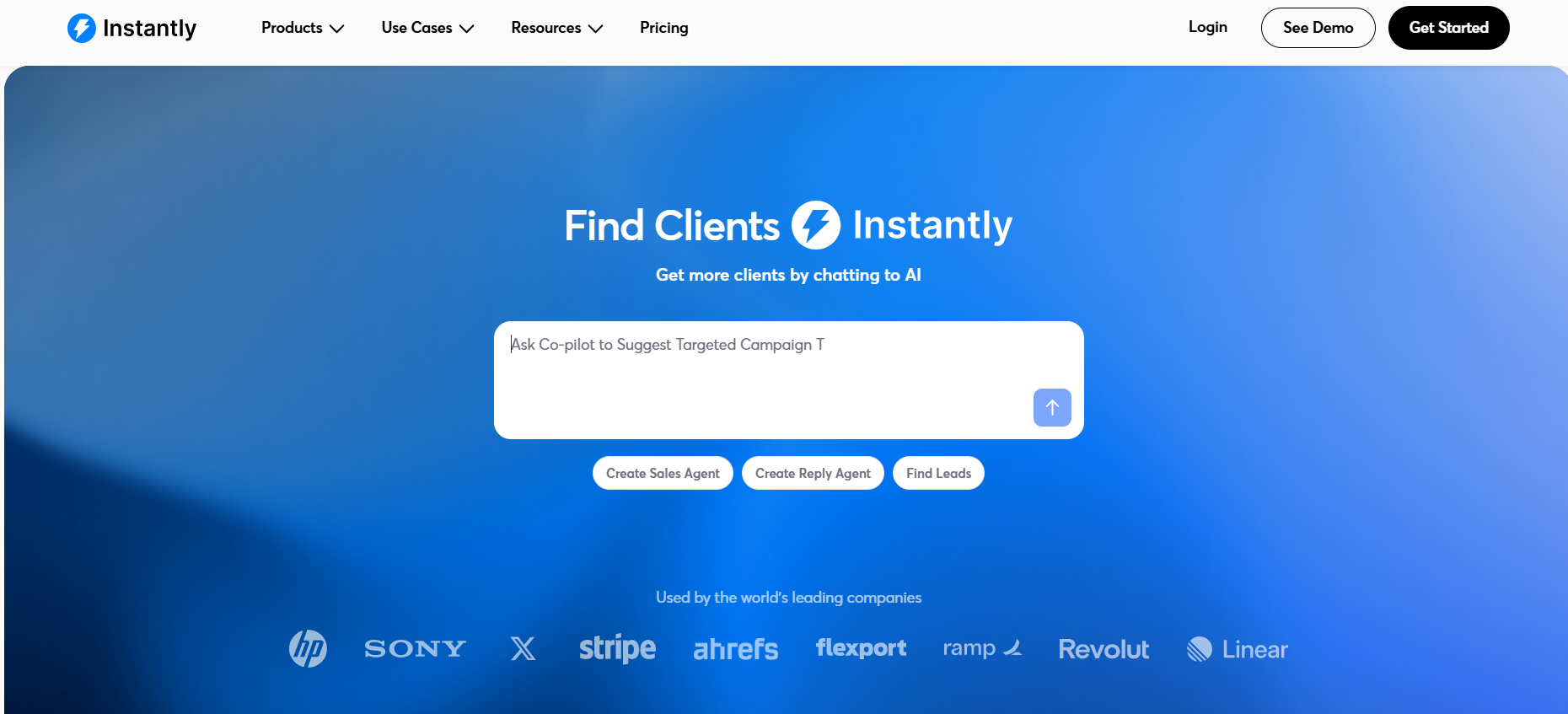
Instantly.ai focuses on cold email at scale with CRM connectivity through integrations.
Instantly.ai is chiefly a cold-email platform with lead management. Instantly offers a native HubSpot integration alongside marketplace, Zapier, and webhook-based workflows for connecting outreach activity with CRM processes. HubSpot contacts and lists can flow into Instantly campaigns, while additional workflows can send outreach activity and updates back into CRM processes. It suits early-stage outbound teams that need a basic respondent handoff. Complex field mapping and bidirectional requirements will outgrow it.
How to Choose the Right CRM Sync Tool for Your Revenue Stack
Choose CRM sync software based on the data problem, existing systems, and engineering capacity. Incomplete or stale CRM records point to enrichment platforms with sync: Bitscale, Clay, Lusha, or Cognism. Warehouse models that never reach the CRM call for Hightouch or Census. Drift between Salesforce, HubSpot, and Marketo favors a data automation platform such as Syncari. When reps fail to log activity, Salesloft or Rattle addresses the behavioral issue.
Then inspect the actual integration depth. Salesforce options are plentiful, while HubSpot support varies. Confirm the specific objects and fields you must map rather than accepting an "integrates with" badge. Reverse ETL requires SQL and warehouse maintenance; Bitscale and Clay are designed for ops-led configuration. Teams that need clean records plus data cleansing tools should prioritize deduplication and normalization alongside enrichment. For how revenue teams use analytics, consistent data structure matters as much as getting the data into the CRM.
CRM Data Quality and the Case for Integrated Enrichment Sync
Each product here handles part of the CRM data problem. The harder issue is not simply transferring data, but ensuring that the data entering the CRM is complete, accurate, and useful. NetSuite's overview of CRM integration notes that connected systems reduce manual entry and errors. The quality of the records moving through those connections determines whether the integration improves revenue operations.
That separates basic sync from enrichment sync. The distinction becomes clearer when comparing intent data, enrichment data, and sales signals. Reverse ETL sends whatever is in the warehouse. A standard integration mirrors the source system. An enrichment-sync platform such as Bitscale improves records before writing them to CRM fields, using waterfall sourcing, AI tools for sales and marketing research, and buying signals for prioritization. The result is more useful data for outbound, routing, and pipeline management.
For revenue teams evaluating CRM sync tools in 2026, the operating question is simple: do you only need to move data, or improve it before moving it? When the answer is both, a platform combining enrichment workflows and CRM synchronization can close the handoff between sourcing data and putting it where the team works. Explore Bitscale's CRM enrichment workflows to see how two-way CRM sync and enrichment can work together.
Frequently Asked Questions
What is the difference between CRM sync and CRM integration?
CRM integration is the broader connection between a CRM and other applications for shared data or functionality. CRM data sync is one part of that connection: keeping records current across systems through one-way pushes, bidirectional mapping, or scheduled batch updates.
Do I need a reverse ETL tool or a CRM enrichment tool?
Start with where the useful data lives. If warehouse models in Snowflake or BigQuery need to reach Salesforce or HubSpot, use reverse ETL such as Hightouch or Census. If CRM records lack emails, phone numbers, firmographics, or intent signals, use enrichment such as Bitscale or Clay. Mature RevOps stacks often use both.
What does bidirectional CRM sync actually mean in practice?
Bidirectional sync propagates changes from either connected system. A title change in Salesforce goes to the connected tool; new engagement data from that tool returns to Salesforce. Conflict resolution matters most: admins need rules for which system wins when both update the same field. Syncari and Salesloft offer per-field rules.
How do waterfall enrichment workflows improve CRM data quality?
Waterfall enrichment queries providers in sequence for each record. When one provider cannot return a work email, the workflow tries the next source. That generally produces higher fill rates than relying on one database. Bitscale and Clay support this logic, reducing incomplete records written into the CRM.
Can I set up CRM sync without engineering support?
Usually, for enrichment and automation products. Bitscale, Clay, Lusha, and Unito let operations teams configure mappings and sync rules without code. Reverse ETL products such as Hightouch and Census typically need SQL knowledge and warehouse access, so a data engineer or analyst is commonly involved.

Sanket
CEO | Co-Founder Bitscale


Sanket is the CEO and Co-Founder of Bitscale. He leads company vision and strategy, building the future of AI-driven sales intelligence for modern B2B teams. Sanket is obsessed with the intersection of AI and go-to-market, and has spent years studying how the best B2B companies find, engage, and convert customers at scale. He writes about company building, product strategy, and where AI is taking the sales industry.
Read other blogs
All Blogs
Salesforce in Claude (Claudeforce): what sellers get, and what it means for your CRM data
Salesforce in Claude puts your live CRM inside Claude with 37 sales skills. What sellers get, who can use it, and how to get your CRM data ready first.
Forward deployed engineer vs. GTM engineer: what each role does and which one you need
Forward deployed engineer vs GTM engineer: what each role builds, who it works for, tools, KPIs and posted 2026 pay, plus which one your company needs.

Clay vs Claude for GTM: what each does, and the better setup (2026)
Clay vs Claude: one is an enrichment tool, the other an AI assistant. What each does for GTM, when you need a data tool, and the setup that uses both well.